


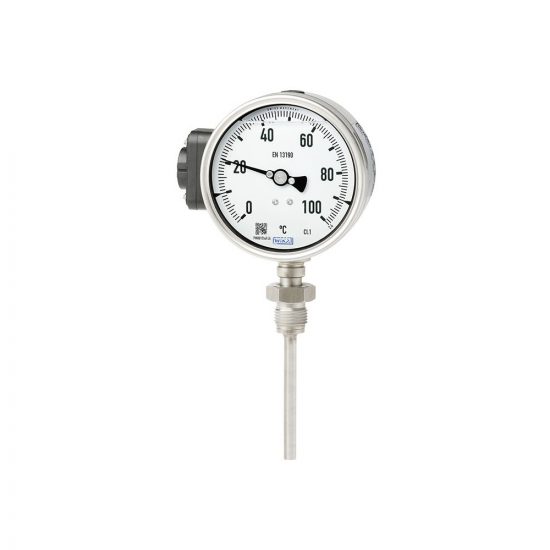

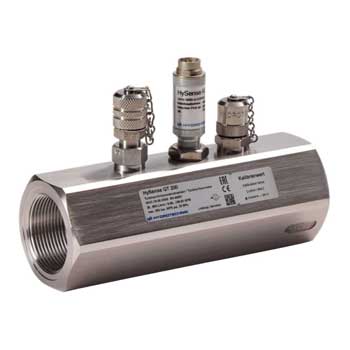
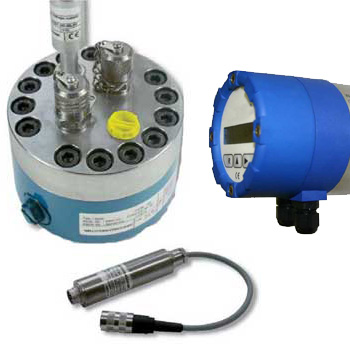
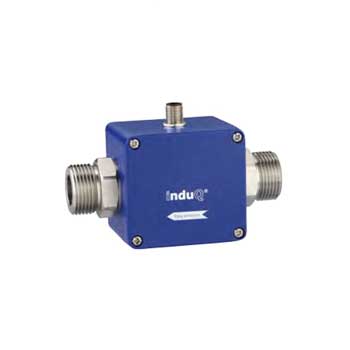
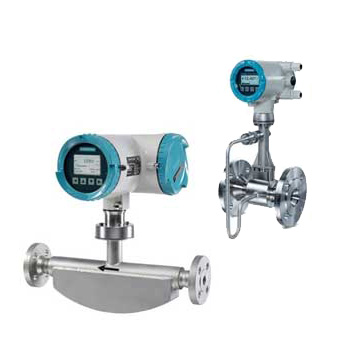
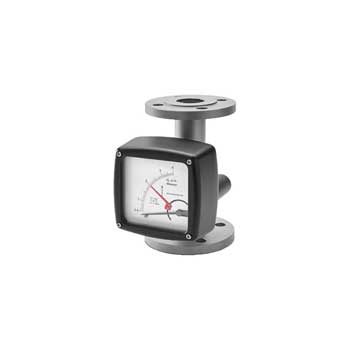
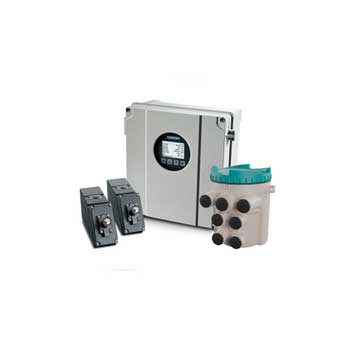
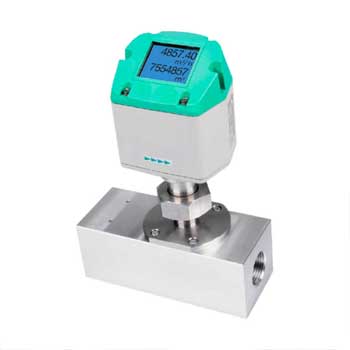





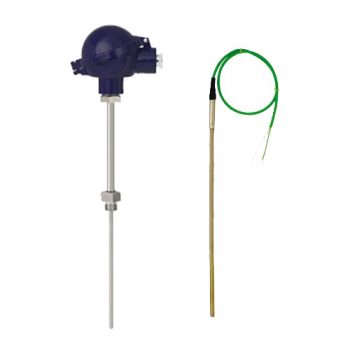
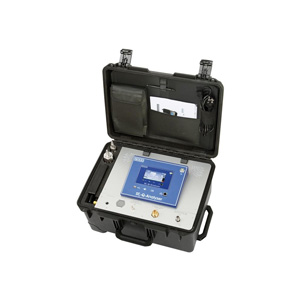
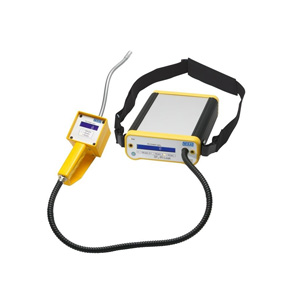
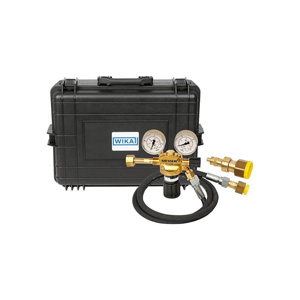
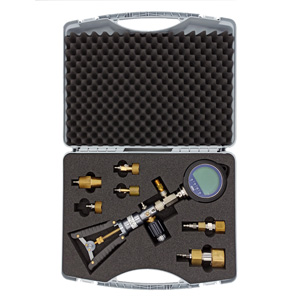
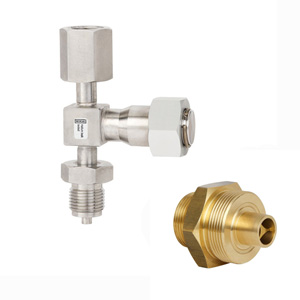
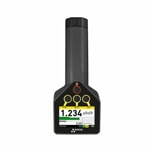
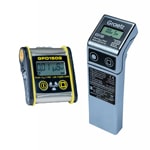



























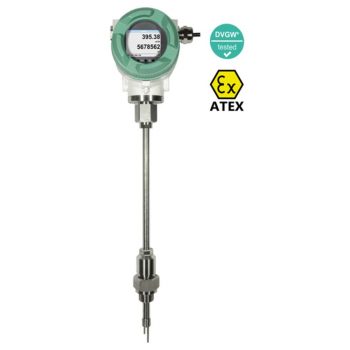
- All wetted parts are made of stainless steel, especially for applications with high demands on cleanliness and surface quality
- Rough industrial applications can be realized due to robust aluminum housing
- Recommended for flammable gases such as natural gas, hydrogen, biogas, etc. due to ATEX or DVGW approval
- Measurement of mass flow rate, direct output of standard volume flow rate
- Highly accurate at small as well as large flows
- Pressure and temperature compensated by the thermal mass flow principle
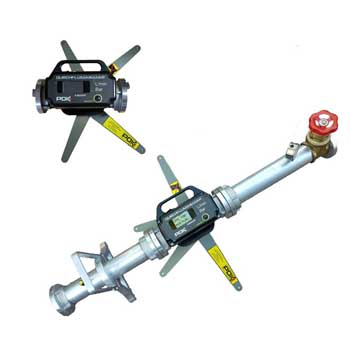
- Quick and easy installation via a standard ½'' ball valve
- No moving parts, therefore low maintenance
- Vanishingly low pressure loss due to vanishingly low blockage of the diameter

 Datasheet Datasheet |
| User manual |
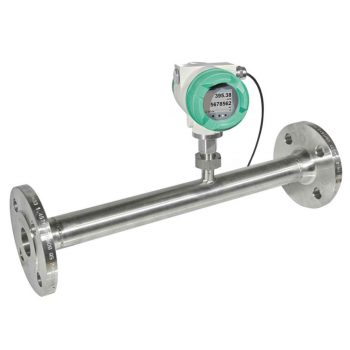
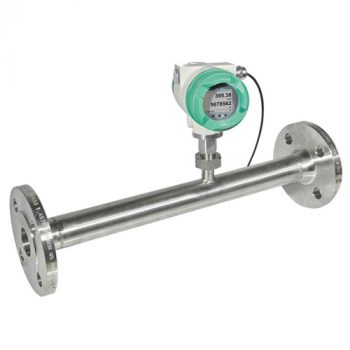
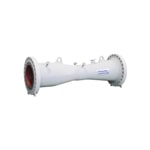
Flow meter VA 570 is supplied with an integrated measuring section for compressed air and gas pipes. The measuring sections are available in flanged version or with R resp. NPT thread.

| Datasheet |
|
User Manual |
|
User Manual |
|
User Manual |

H² Flow Sensors for Hydrogen Applications
H² flow sensors are designed to measure mass or volumetric flow of hydrogen gas and hydrogen mixtures, often under high pressure and varying temperature conditions. Depending on the application, thermal mass, Coriolis, ultrasonic or differential pressure flow principles are used, each adapted to the specific properties of hydrogen such as low density, high diffusivity and explosion risk. Typical applications include electrolysers, fuel cells, hydrogen storage systems, LOHC processes, pipeline networks and refuelling stations.
FAQ
What is an H² flow sensor?
An H² flow sensor is a flowmeter specifically engineered for hydrogen measurement. Depending on the measuring principle it determines mass flow or volume flow and often provides additional pressure, temperature or density data for compensation and billing purposes.
Which measuring principles are used for hydrogen flow sensors?
In practice, thermal mass flowmeters, Coriolis mass flowmeters, ultrasonic flowmeters and differential pressure systems with suitable primary elements are commonly used. The selection depends on pressure, temperature range, required accuracy, viscosity, flow range and installation conditions.
Why is hydrogen a challenging medium for flow measurement?
Hydrogen has very low density, very high diffusion capability and a high heating value combined with significant explosion risk. As a result, tightness, material compatibility, avoidance of leakage and accurate pressure and temperature compensation are critical design criteria for sensors, seals and electronics.
What is the difference between mass and volume flow for H²?
Volume flow describes the gas volume passing the sensor per unit of time but is strongly influenced by pressure and temperature in compressible gases. Mass flow represents the actual gas mass per unit of time and is therefore the more robust parameter for process control, energy balancing, billing and efficiency assessment of hydrogen systems.
Which accuracy can typically be achieved?
Achievable accuracy depends on the measuring principle and instrument design. Coriolis and high-end thermal mass flowmeters can reach very low measurement uncertainties in the per mille or low percent range, while simple volumetric meters usually show higher tolerances.
How do pressure and temperature influence the measurement?
Pressure and temperature affect hydrogen density and flow behaviour as well as the mechanical dimensions and stiffness of the measuring section. Many H² flow sensors therefore measure pressure and temperature directly and internally correct to standard volume flow or mass flow to ensure reproducible results.
Which materials are used for H² flow sensors?
Wetted parts are typically made from high-alloy stainless steels, nickel-based alloys or special plastics and sealing materials that are resistant to hydrogen embrittlement, corrosion and permeation. Material selection is based on pressure, temperature, humidity, contamination level and possible additive gases.
What is the role of approvals and standards?
For custody transfer and billing applications, metrological approvals according to the relevant regulations are required. In hazardous areas, additional approvals such as ATEX or IECEx are necessary, and for safety-related functions further requirements with regard to functional safety and proven-in-use evidence may apply.
How important is proper installation of an H² flow sensor?
Installation quality is crucial for measurement performance and service life. Straight inlet and outlet sections, proper mounting orientation, stress-free piping connections, suitable filtration and drainage as well as exact alignment according to the manufacturer’s specifications must be ensured.
Where are H² flow sensors typically used?
They are used along the entire hydrogen value chain: electrolysers, reformer units, compressors, storage tanks and trailers, pipelines, distribution stations, fuel cell systems and hydrogen refuelling stations. Precise H² flow sensors are also essential in laboratories, test rigs and development facilities.
What are the specific requirements at hydrogen refuelling stations?
Hydrogen refuelling applications involve high pressures, fast load changes and strict legal metrology and safety requirements. Therefore, Coriolis mass flowmeters or specially certified high-pressure flow sensors are widely used, meeting the relevant standards and guidelines for vehicle refuelling.
How are H² flow sensors maintained and calibrated?
Maintenance and calibration intervals depend on operating conditions, contamination level and regulatory framework. In critical hydrogen applications, regular calibration, functional checks and plausibility comparisons are defined to detect measurement drift at an early stage.
Which outputs and interfaces do H² flow sensors provide?
Common interfaces are analogue current or voltage outputs and digital interfaces such as Modbus, CAN, PROFIBUS, PROFINET or Ethernet-based protocols. Additional pulse, alarm and totaliser outputs as well as integrated data logging functions may be available.
How are leakage and moisture in the system handled?
Leakage must be avoided by design and minimised through appropriate sealing concepts, as escaping hydrogen is safety-critical and can distort the measurement. Many systems therefore implement leakage monitoring, condensate drainage, filtration and regular tightness checks.