


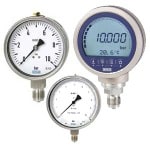
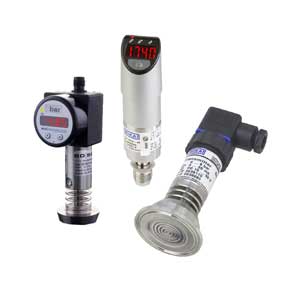
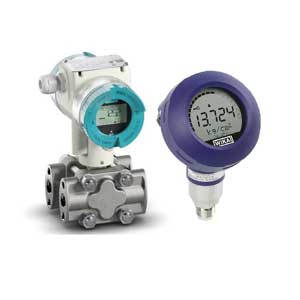
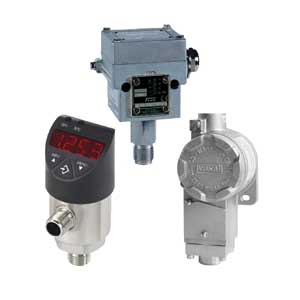
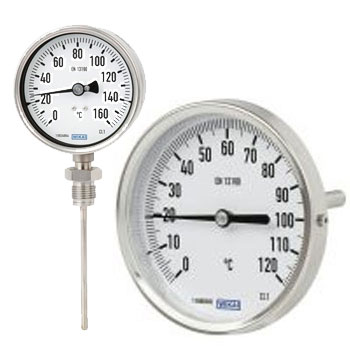
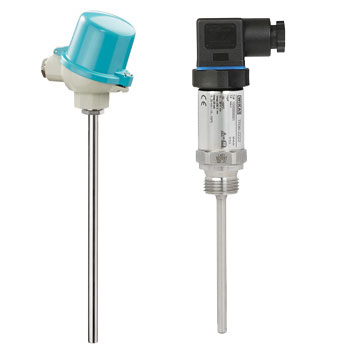
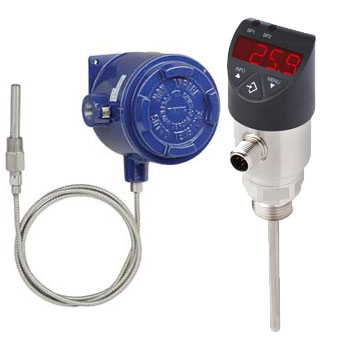
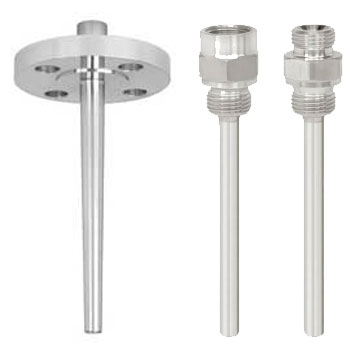




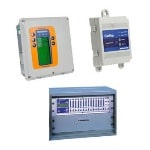


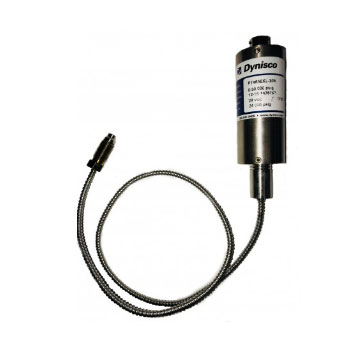
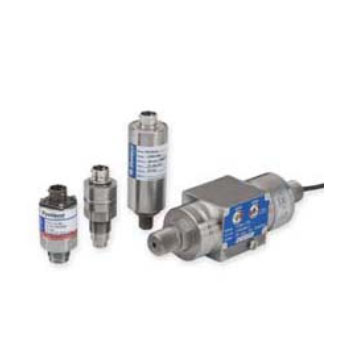
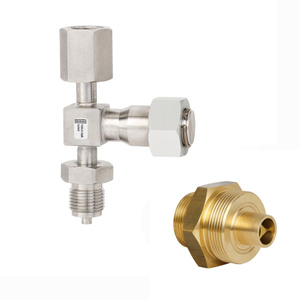

























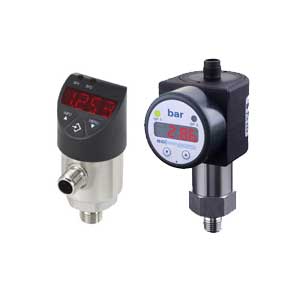

Pressure & Differential Pressure Switches – Reliable Switching, Safe Monitoring
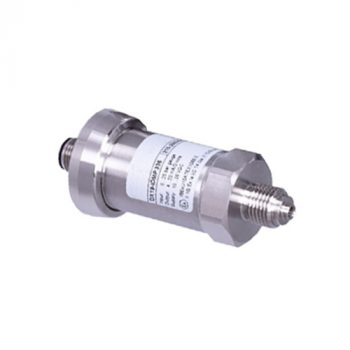
Pressure switches and differential pressure switches monitor fixed thresholds and actuate relay, transistor, or analog outputs when limits are crossed. They suit pneumatics/hydraulics, filter & room-pressure monitoring, pump/compressor control, as well as process and building automation. Available as mechanical (diaphragm/piston) or electronic switches (with display/IO-Link/transistor output) and optional ATEX/IECEx, hygienic design, or IP67/69K.
ICS Schneider Messtechnik assists with range selection, media/material compatibility, switch hysteresis, EMC/IP rating, mounting and—on request—IIoT integration via PLC/edge/MQTT.
FAQ on Pressure & Differential Pressure Switches
Answers on selection, accuracy, hysteresis, media compatibility, protection classes, electrical connections, and typical applications.
What is the difference between mechanical and electronic pressure switches?
| Aspect | Mechanical | Electronic |
|---|---|---|
| Principle | Diaphragm/piston + microswitch | Sensor + signal processing |
| Hysteresis | Fixed/by design | Often adjustable |
| Functions | Simple on/off | Display, min/max, analog, IO-Link |
| Vibration/Shock | Very robust | Robust; model-dependent |
| Accuracy | Sufficient for switching | Higher; diagnostics possible |
How do I select the correct switching range?
Choose a nominal range of 1.3–2.0 × the working pressure. With strong pulsation/spikes, size larger or add a snubber/restrictor.
What is switching hysteresis and how do I set it?
Hysteresis is the distance between the on- and off-point. It avoids chatter and excessive switching. Electronic switches typically offer adjustable hysteresis; mechanical types have a fixed design value.
Which connection and output types exist?
| Category | Options | Notes |
|---|---|---|
| Electrical outputs | Relay, PNP/NPN, open-collector | Consider load, EMC, safety |
| Analog | 4–20 mA, 0–10 V | Trends/monitoring alongside switching |
| Communication | IO-Link, Modbus (model-dependent) | Parametrization, diagnostics, remote setup |
| Connectors | M12, DIN, cable pigtail | IP rating, strain relief, EMC |
Are differential pressure switches suitable for filter monitoring?
Yes. They switch at a defined Δp (e.g., clogged filter). Important: correct impulse lines, venting/draining, frost protection, and spike protection.
Which media/material combinations are common?
Brass for neutral media (air/water/oil), stainless steel 316L for more corrosive media, Hastelloy®/PTFE in chemical service. Match seals to temperature/chemistry (EPDM/FKM/PTFE).
What protection classes are available?
From IP54 up to IP67/69K for washdown. In hazardous areas, observe ATEX/IECEx (e.g., Ex ia/ib). Ensure cables/connectors and vents meet the intended IP rating.
How do I protect switches against pressure spikes and vibration?
Use snubbers/restrictors, optionally capillaries or remote mounting. Mechanically decoupled installation and (for integrated displays) glycerin filling help further.
Can I set switching point and unit on the device?
For electronic switches, yes—via keys/display or IO-Link. Mechanical variants usually offer an adjustment spindle with scale.
How do I integrate pressure switches into PLC/IIoT?
Digital outputs to PLC DI cards, analog outputs to AI cards. With IO-Link/Modbus you can feed an edge gateway to publish via MQTT/HTTPS (dashboards, alarms, historian).
What must I consider for high medium temperatures?
Use a siphon/cooling element to protect electronics. Consider material and seal resistance (CIP/SIP in hygienic areas).
Typical applications?
- Filter/room pressure in HVAC/pharma
- Pump/compressor control (dry-run/overpressure protection)
- Hydraulics/pneumatics – limits and safety
- Level via Δp in closed tanks
How often should switches be tested/calibrated?
Depends on criticality: as a rule of thumb annually; for safety loops semi-annually. Document proof tests (as-found/as-left).
Gauge, absolute, or differential pressure—which fits?
Gauge (relative) for most switching tasks, absolute for vacuum/barometry, differential for filters/flow/level in closed systems.
What process connections are common?
| Connection | Standard | Use |
|---|---|---|
| G 1/4 / G 1/2 | ISO 228 | General industry |
| ¼″ NPT / ½″ NPT | ASME | US/Oil & Gas |
| Tri-Clamp | Hygienic | Food/pharma (with diaphragm seal) |
How does hysteresis influence process stability?
Too small a hysteresis causes frequent toggling (wear); too large makes response sluggish. Select per application (e.g., 1–5% of span).
Which EMC measures are recommended?
Shielded, twisted cables; proper grounding/shield termination; separation of power/signal cables; surge protection; clean equipotential bonding.
Do you support selection, parametrization, and commissioning?
Yes—from application review (media/temperature/pressures) and range & hysteresis, material/seal choice, EMC/IP design through to PLC/IIoT integration—including documentation.