








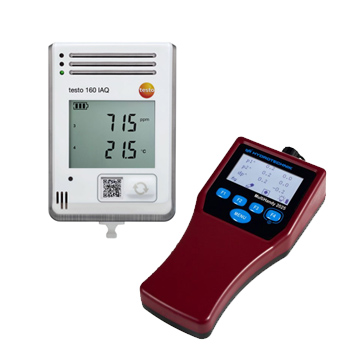
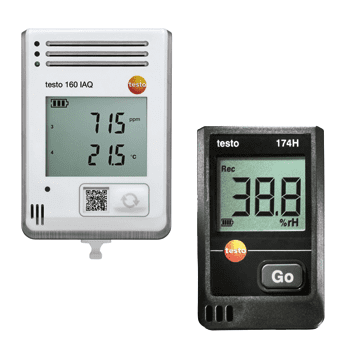
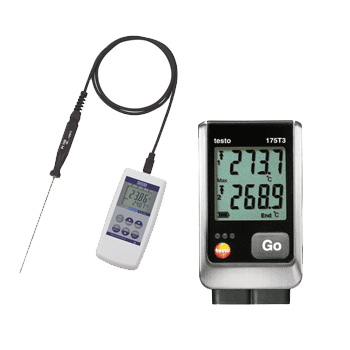
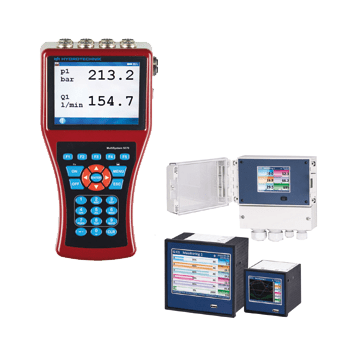



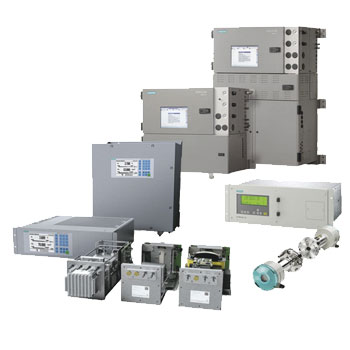
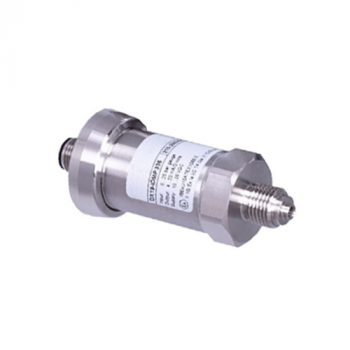
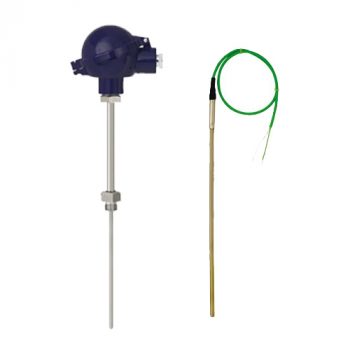
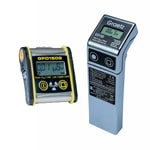
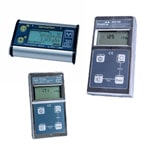
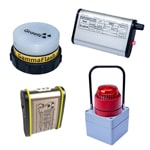
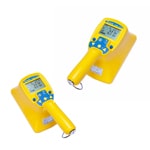

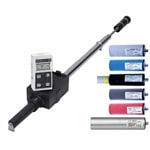
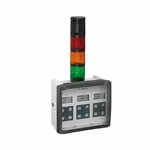
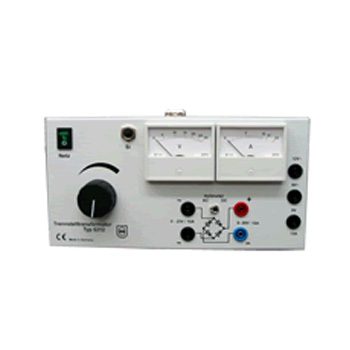
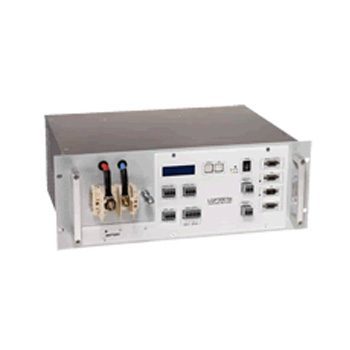
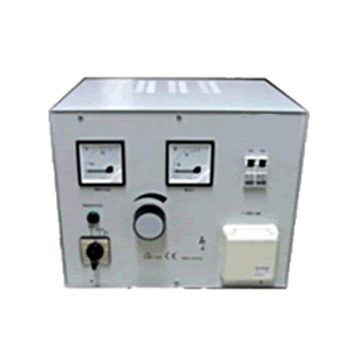
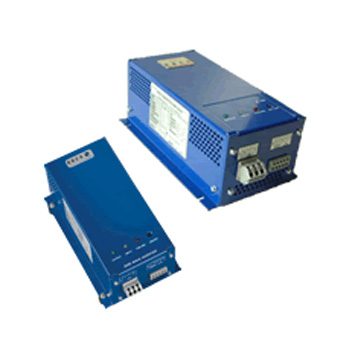
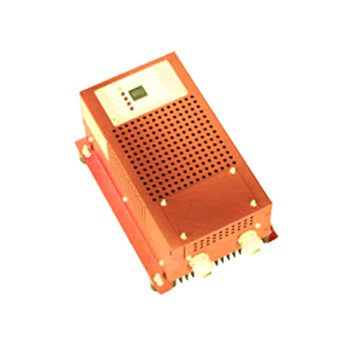

























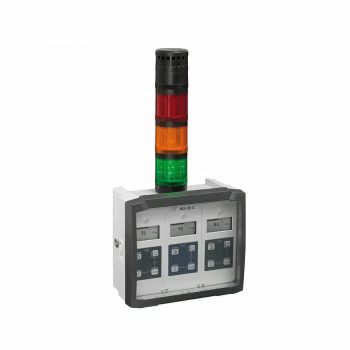
- Simultaneous monitoring of up to 3 areas with any probes from the GRAETZ probe program
- Up to 3 measuring channels
- An illuminated LC display is assigned to each measuring channel, on which the measured values are displayed
- When using gamma probes, the dose rate is shown on the LC display in Sv/h
- When using end window probes (α-/β-measurements) or NaI scintillation probes (β-/γ-measurements), the measured value is displayed in Ips
- For each channel 4 freely programmable dose rate warning thresholds in the entire measuring range of the respective connected gamma probe
- The measuring range switchover within a channel takes place automatically. If a measuring channel triggers a dose rate alarm, both an optical and an acoustic warning is given at the WS05C by the integrated warning light column
- In the standard version: Green for “Ready for operation”, Orange for “Warning threshold exceeded”, Red for “Error message” (e.g. probe failure).
- Red LED above the display indicates which measuring channel has triggered an alarm
- An RS-232 interface is available for connecting a measuring channel to a PC
- Relay output for controlling an additional external optional warning light column for each measuring channel
- Potential-free relay output for each measuring channel (switching capacity max. 24 V, 20 mA)
- Acoustic alarm with triggered warning threshold occurs when the door to the monitored room is open, a motion detector or a light barrier has been activated
- Counter for irradiation time
- Operating hours counter
- Rotating beacon
- Integration of already existing warning devices
- External warning light columns (optical/acoustic)
- Probe cable, extension up to 100 m (standard length: 1.25 m)
- Emergency power supply (300 W) for uninterrupted operation of WS05C in case of power failure
- Special designs possible on request
 Datasheet Datasheet |

Room Radiation Monitors for Area Surveillance
Room radiation monitors are stationary systems for continuous monitoring of ambient dose equivalent rate in areas where gamma and X-ray radiation may occur. External probes measure dose or count rates, which are displayed on dedicated channels and compared with freely configurable warning and alarm thresholds. Optical and acoustic indicators, potential-free relay contacts and communication interfaces allow integration into safety and supervisory systems.
| Parameter | Typical specification |
|---|---|
| Quantity | Ambient dose equivalent rate H*(10) |
| Measuring channels | 1–3 independent channels with separate probes |
| Display | Backlit LC displays for each channel |
| Alarming | Multi-level warning and alarm thresholds, optical and acoustic indicators |
| Interfaces | Serial interfaces (e.g. RS-232) and relay outputs |
Questions & Answers on Room Radiation Monitors
What is a room radiation monitor?
A room radiation monitor is a fixed installation that continuously measures dose rate in supervised areas and generates warning and alarm signals when predefined limits are exceeded to protect personnel and equipment from excessive exposure.
Which types of radiation are typically monitored?
The systems primarily monitor gamma and X-ray radiation; depending on the probe type, beta and in some cases alpha radiation can also be detected as count rates using end-window or NaI scintillation probes.
Which quantity is measured by room radiation monitors?
They usually measure the ambient dose equivalent rate H*(10) in Sv/h, often complemented by integrated dose values in Sv or count rates in counts per second, depending on the probe and channel configuration.
How many measuring channels can be monitored simultaneously?
Many systems are available with one to three independent channels so that several rooms or measuring points can be monitored in parallel with dedicated probes and separate displays.
Which probes can be connected to room radiation monitors?
Depending on the system, various gamma probes, end-window probes for alpha/beta measurements and NaI scintillation probes for beta/gamma measurements can be connected, and their ranges and energy responses define the characteristics of each channel.
How are warning and alarm thresholds implemented?
Each measuring channel normally provides several freely programmable warning and alarm thresholds; the internal processing continuously compares measured values with these thresholds and activates optical indicators, sounders and relay contacts when limits are exceeded.
Which units are used for indication?
For gamma probes, dose rate is typically displayed directly in Sv/h or µSv/h, while for count rate measurements with beta or alpha probes the indication is usually given in counts per second.
How is alarming realized in and around the monitored area?
Alarming is provided by status indicators on the instrument, LEDs showing normal operation, warning and fault states, and by external optical and acoustic beacons that clearly signal alarm conditions outside the monitored room.
Which interfaces are available for connection to higher-level systems?
Many room radiation monitors offer serial interfaces such as RS-232 and potential-free relay outputs per channel, allowing transfer of alarm states to higher-level control systems, access control or building management systems.
Where are room radiation monitors typically used?
Typical applications include controlled areas in radiation protection zones, radiology and radiotherapy departments, hot cells, laboratory rooms, storage areas for radioactive materials as well as nuclear installations and waste handling facilities.
How is long-term measurement reliability ensured?
Long-term reliability is achieved by regular functional checks, documented calibration of probes and the complete system, and periodic verifications according to applicable radiation protection and quality assurance requirements.
Why is an uninterruptible power supply important?
An uninterruptible power supply ensures that the monitoring system remains fully operational during mains disturbances or power failures so that alarm and warning functions are always available.
How do room radiation monitors differ from portable dose rate meters?
Portable instruments are intended for spot measurements and local dose rate assessments, whereas room radiation monitors are designed for continuous operation with fixed probes, event-driven alarming and integration into safety-related systems.
What should be considered during installation?
Installation must take into account probe position, shielding, typical radiation fields, cable routing, access conditions and the visibility of warning indicators to ensure safe and reliable monitoring of the relevant area.