









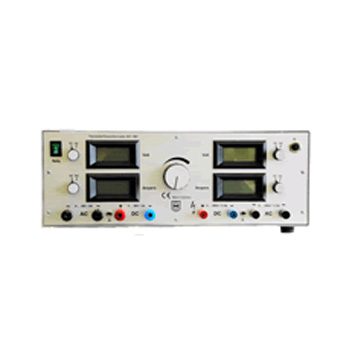
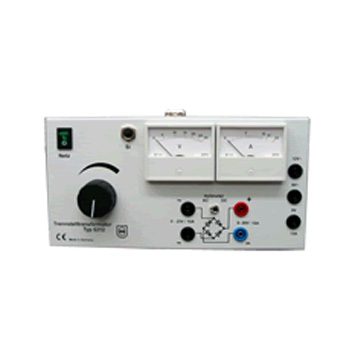
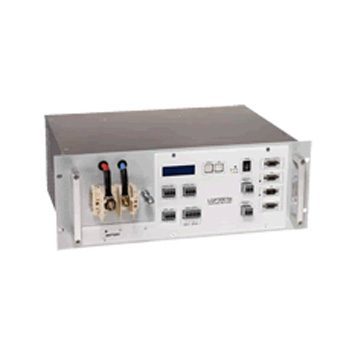
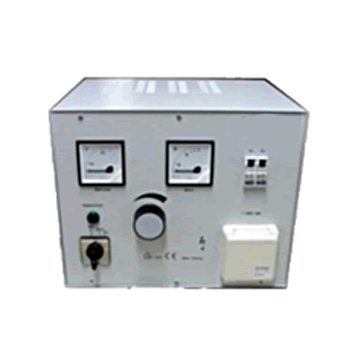

























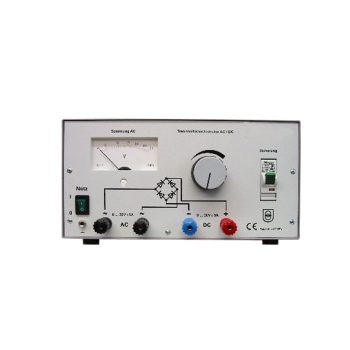
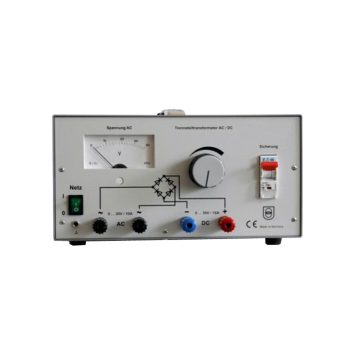
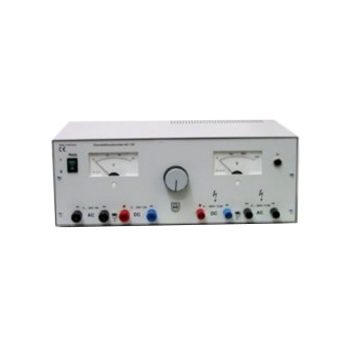
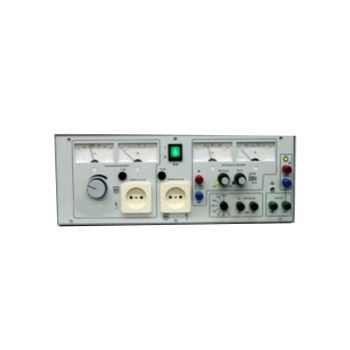
AC 230V / 2A;AC 0 - 250V / 3A;3 to 24V / 2A;DC 5V/3A;DC 0 - 40V / 0 - 2.5A and continuity tester with buzzer
 Datasheet Datasheet
|
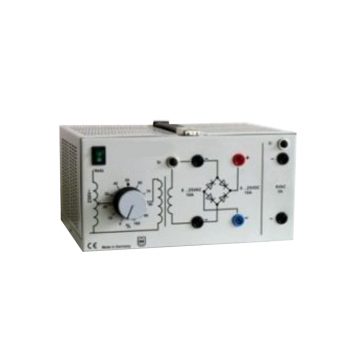
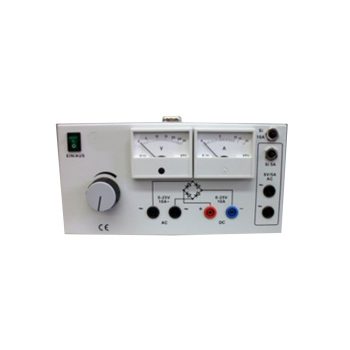
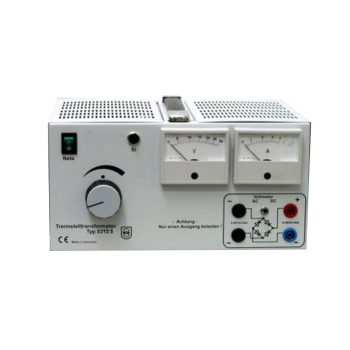
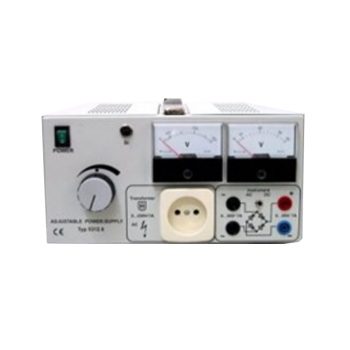
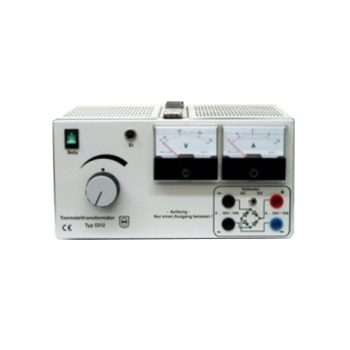
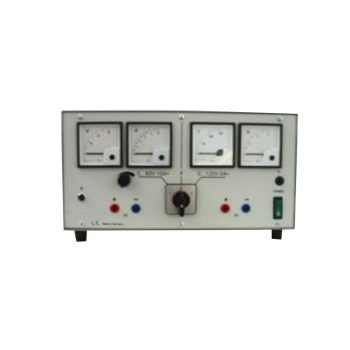
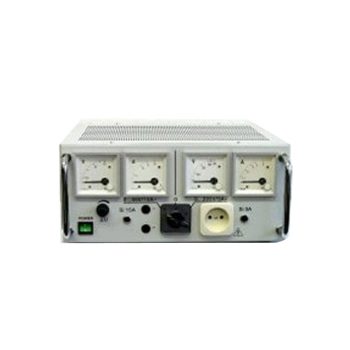
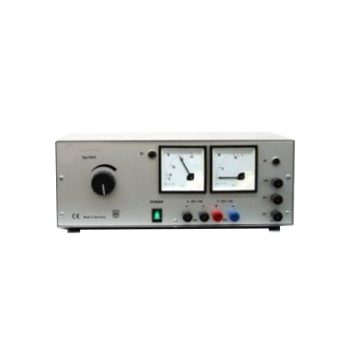
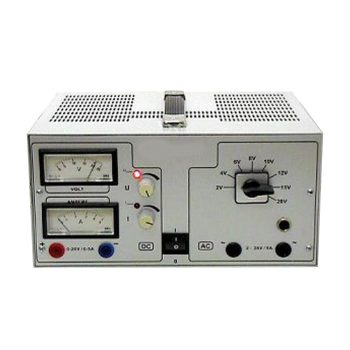
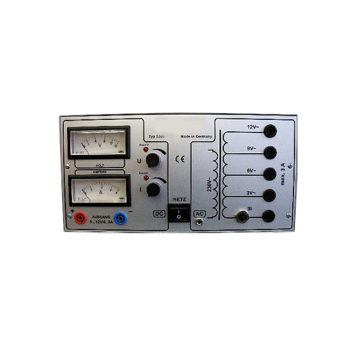
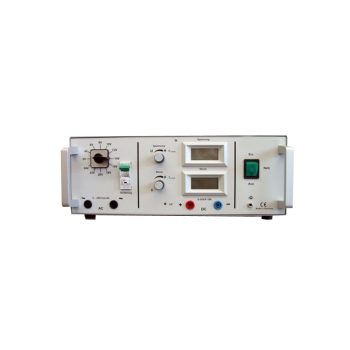
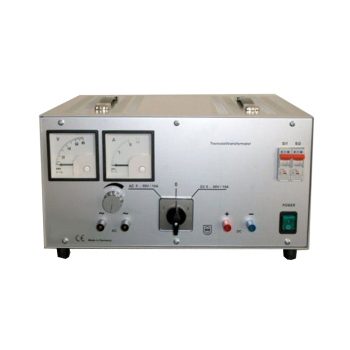
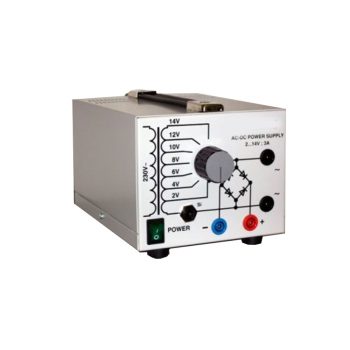
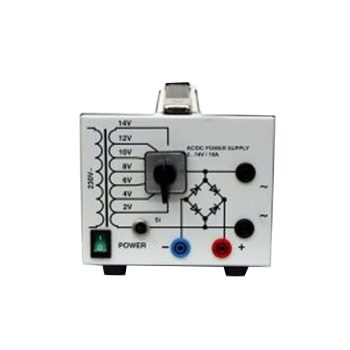

Unregulated Universal Power Supplies (AC/DC)
Unregulated universal power supplies are robust AC/DC power units with stepwise or stepless adjustable output voltage and high output current capability. They are typically based on an isolation transformer with a downstream bridge rectifier and smoothing capacitor. This provides selectable AC and/or DC voltages from extra-low safety levels up to higher test voltages, suitable for laboratories, workshops, training environments and test benches.
Questions & Answers on Unregulated Universal Power Supplies
What is the difference between regulated and unregulated power supplies?
Regulated power supplies keep the output voltage electronically stabilized, largely independent of mains fluctuations and load changes. Unregulated power supplies, by contrast, deliver a load-dependent output voltage determined by the transformer and rectifier. This results in higher tolerances and ripple, but allows a simple, rugged design with high continuous power capability.
What are typical applications for unregulated universal power supplies?
They are mainly used for general experimental setups, test benches, training laboratories, functional tests and as universal energy sources for resistive and inductive loads. Typical loads include motors, relays, solenoid valves, lamps, heating resistors and other consumers where extremely precise and highly stabilized voltage is not the primary requirement.
Which output ranges are common?
Depending on the model, variable output voltages from approximately 0–30 V AC/DC in the extra-low safety range and, in some cases, significantly higher AC test voltages up to around 225 V are available. Nominal output currents range from a few amperes up into the double-digit ampere range, allowing the supply of high-power loads such as motors or larger test objects.
How are voltage and current adjusted?
Voltage is adjusted either continuously via potentiometers or using selector switches with fixed voltage steps. Some units provide separate controls for AC and DC outputs. The actual current is determined by the connected load and is limited by the rated output current of the unit and by built-in protection elements such as thermal cut-out switches.
What is the impact of ripple on unregulated power supplies?
Due to the simple rectification and smoothing, the DC output voltage features comparatively high ripple. For many applications such as drives, magnetic coils or heaters this is uncritical. For sensitive electronics or precision measurement circuits, however, a regulated or specially filtered supply with low ripple is typically required.
What does galvanic isolation between input and output mean?
Galvanic isolation uses an isolation transformer to electrically separate input and output, resulting in a floating, unearthed output. This increases safety and enables measurement and test setups with a defined reference earth. It also allows more flexible and safer series or parallel connection of multiple units.
Can AC and DC outputs be used simultaneously?
Many universal power supplies use one transformer whose secondary voltage is available either directly as AC or via a rectifier as DC. Whether AC and DC can be used simultaneously depends on the specific design. In many cases, the operating modes must be switched, so that only one type of output voltage is available at a time.
Which protection features are important for unregulated power supplies?
Typical protection features include thermal overload switches in the transformer, mains fuses, short-circuit resistant design of certain output ranges, temperature monitoring and in some cases current limiting. Additional safety is provided by safety output sockets, protective insulation and defined degrees of protection (e.g. IP30) for safe operation in laboratories and workshops.
How is the output voltage monitored?
Many units are equipped with analogue or digital meters for voltage and current, sometimes separately for AC and DC. This allows direct monitoring of output quantities without additional measuring instruments. Simpler devices may require external meters for supervision of voltage and current.
What are the key criteria for selecting an unregulated power supply?
Important selection criteria include the required voltage range (AC/DC), maximum output current, continuous power rating in VA, the required voltage type (extra-low safety voltage or higher test voltage), the type of load (inductive, resistive, capacitive) and desired convenience features such as multiple outputs, displays, switchable voltage ranges and protection functions.
How do load changes affect the output voltage?
In unregulated power supplies, the output voltage decreases as load current increases, due to the internal resistance of the transformer and rectifier circuit. This load dependency is often accepted or even desired in test setups, as it reproduces the behaviour of practical supply networks and allows realistic verification of circuit designs.
Can multiple unregulated power supplies be combined?
If the outputs are galvanically isolated and floating, power supplies can be connected in series for higher voltages or in parallel to increase available current. The permissible isolation voltages, current limits and correct polarity must be carefully observed to prevent damage and unsafe operating conditions.
Which mechanical designs are typical?
Unregulated universal power supplies are typically built as robust bench-top units with carrying handle and easily accessible safety sockets. A metal enclosure provides mechanical strength, heat dissipation and electromagnetic shielding. Large cooling surfaces and natural convection enable high continuous power without additional fan noise.
How do mains voltage tolerances influence the output?
Since these units are directly transformer-coupled to the mains, fluctuations of the input voltage cause proportional changes of the output voltage. Within the normal mains tolerance range, deviations remain limited but should be considered or documented with additional measurements for precise experiments or formal test records.
Are unregulated supplies suitable for electronic circuits?
They can be used, but the higher ripple and load-dependent voltage must be taken into account. For sensitive electronics, digital circuits or reference measurements, additional filter stages, preregulators or downstream regulated laboratory power supplies are often employed to provide stable supply voltages with low ripple.