






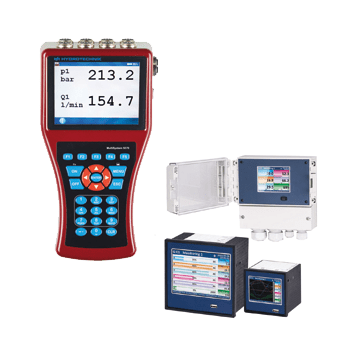
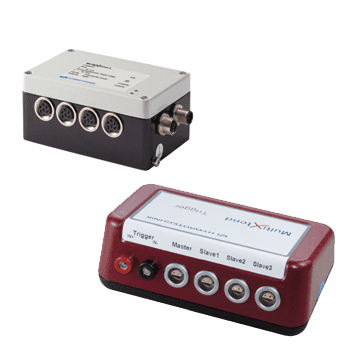
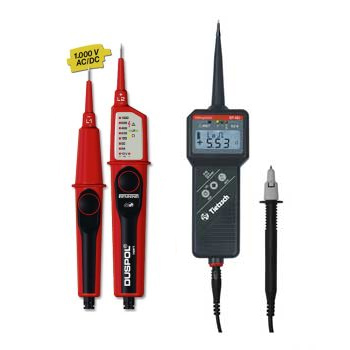
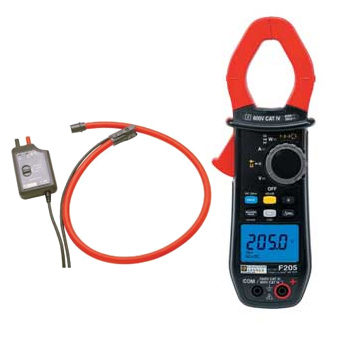


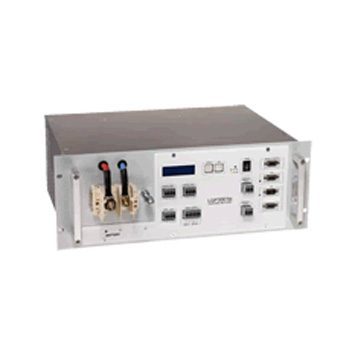
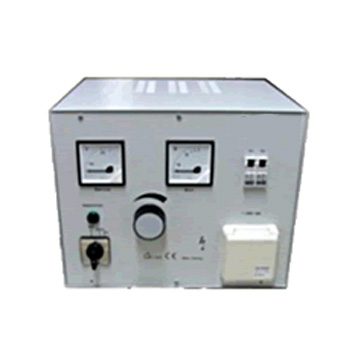



























Voltage Testers
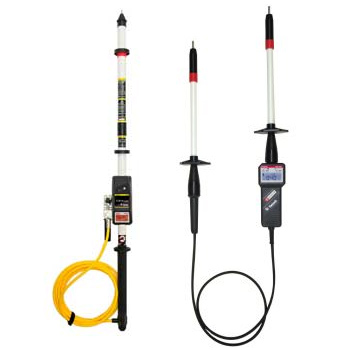
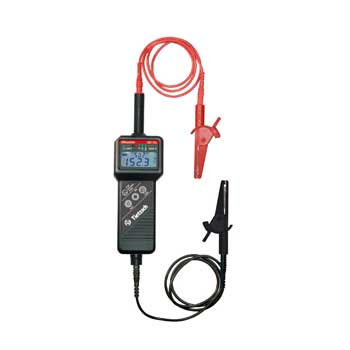
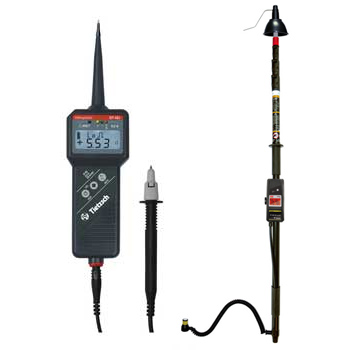
Voltage testers are measurement and testing devices used to detect, measure or display electrical voltages. Depending on the type, they can be simple phase indicators, voltage and continuity testers or multifunctional instruments showing AC/DC voltage, frequency and impedance. They serve for quick checks, fault detection and safety verification of electrical installations.
FAQ
What is a voltage tester?
A voltage tester is a device that indicates whether voltage is present and in advanced versions also measures its magnitude or displays additional parameters such as frequency or resistance.
What types of voltage testers exist?
Typical types include simple phase or voltage indicators (e.g., neon or LED indicators), continuity/voltage testers with acoustic signal, and digital testers with display for voltage, frequency and resistance measurement.
Which safety category (CAT) should voltage testers comply with?
Voltage testers used in installation or distribution networks should meet at least measurement category CAT III or CAT IV according to IEC 61010 or IEC 61243. This ensures sufficient protection against over-voltage transients.
How is a voltage tester correctly connected to the installation?
The test probe or clamp must be safely connected to the test point, the device must reference a suitable ground or neutral and the user must follow the operating manual and safety rules.
When is calibration of a voltage tester required?
Calibration may be required under international standards or specific norms. Manufacturer documentation provides details on intervals and procedures.
What pre-test and safety measures should be taken before measurement?
Prior to use of a voltage tester, the power supply should be secured/isolated, personal protective equipment worn and the test points cleared or secured according to safety regulations.