
























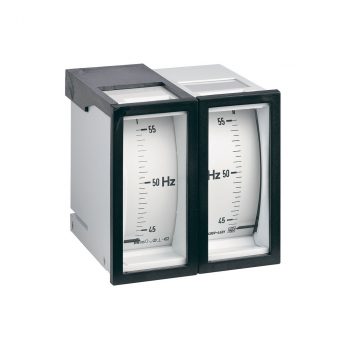
| INSERTION | direct |
|---|---|
| FORMAT | 96x96 mm |
| VOLTAGE | 230…240 V |
| TYPE | Double frequencymeter |
| SCALE | 55…65 Hz |
| OPTIONS | without |
Datasheet |
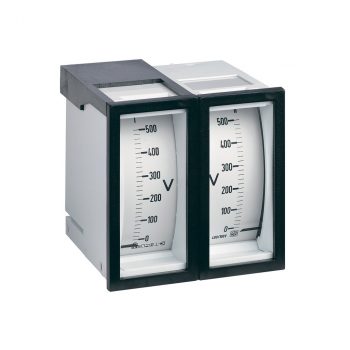
| INSERTION | on VT |
|---|---|
| FORMAT | 96x96 mm |
| VOLTAGE | 110 V 50…60 Hz = 100 % |
| TYPE | Double voltmeter |
| SCALE | 0…120 % |
| OPTIONS | without |
Datasheet |
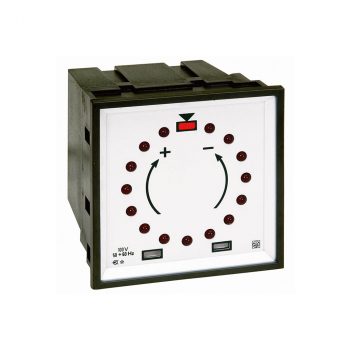
| INSERTION | on VT |
|---|---|
| FORMAT | 96x96 mm |
| VOLTAGE | 100…115 V 50…60 Hz |
| TYPE | LED synchroscope |
| OPTIONS | without |
Datasheet |
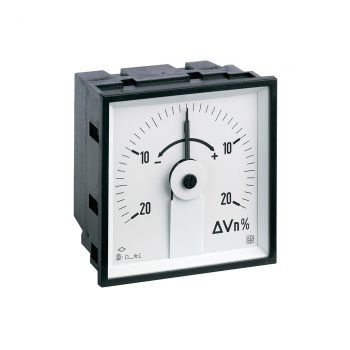
| INSERTION | on VT |
|---|---|
| FORMAT | 96x96 mm |
| VOLTAGE | 110 V 50…60 Hz |
| TYPE | Differenzial voltmeter |
| SCALE | 20…0…20 deltaVn% |
| OPTIONS | without |
Datasheet |
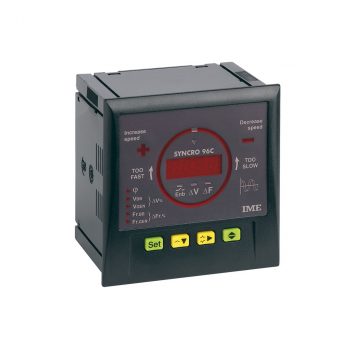
| AUX | 95...126 Vac |
|---|---|
| INSERTION | on VT |
| FORMAT | 96x96 mm |
| VOLTAGE | 30…150 V 35…80 Hz |
| TYPE | LED synchroscope with synchronizing contact |
Datasheet |
User Manual |
| INSERTION | on VT |
|---|---|
| FORMAT | 96x96 mm |
| VOLTAGE | 100 V 50 Hz |
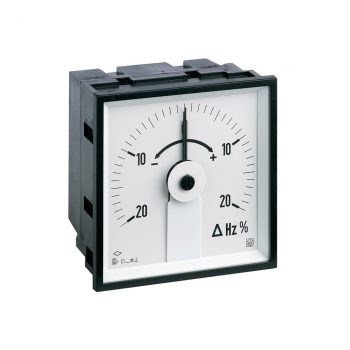
| TYPE | Differential frequencymeter |
| SCALE | 20…0…20 deltaHzn% |
| OPTIONS | without |
Datenblatt |
| INSERTION | on VT |
|---|---|
| FORMAT | 96x96 mm |
| VOLTAGE | 100 V 50…60 Hz |
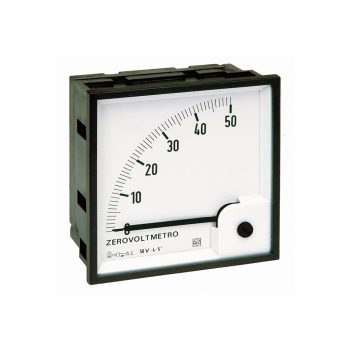
| TYPE | Nullvoltmeter |
| SCALE | 0…50 V |
| OPTIONS | without |
Datasheet |
Analog Synchronization Panel Meters / Synchronisation Meters
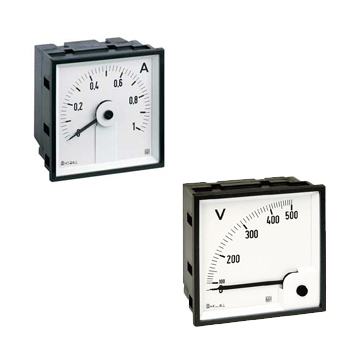
Analog synchronization panel meters are used to compare two AC voltage sources in terms of phase, frequency and voltage in order to ensure safe synchronization before paralleling or switching. They provide a real-time visual indication via pointer and scale, allowing operators to quickly assess the degree of synchronism between two power sources. These meters are designed for installation in switchgear and distribution panels and offer a simple, robust method of synchronization without requiring digital electronics.
F&Q
What is an analog synchronization meter?
An analog synchronization meter is a panel-mounted instrument that displays differences in voltage, phase angle or frequency between two AC sources to determine when synchronization is safe.
Which electrical quantities are compared?
Typical parameters include RMS voltage, phase angle and sometimes frequency, depending on the design and application.
How does an analog synchronization meter work?
The internal measuring mechanism evaluates the difference between two voltage inputs. Phase and voltage differences produce a pointer deflection. When both sources are synchronized (matching voltage, phase and frequency), the pointer indicates a centred or neutral position.
Why use analog synchronization meters?
They provide immediate and intuitive visual feedback without relying on complex electronics. Their simplicity and robustness make them ideal for basic synchronization tasks in industrial environments.
Where are these devices used?
They are commonly used in switchgear, generator systems, dual-source supply panels, emergency power systems and any installation where two AC sources must be matched before connection.
What advantages do analog synchronization meters offer?
They are durable, simple to operate, independent of auxiliary electronics and provide clear visual indication of differences in phase and voltage.
What are the limitations?
They offer limited accuracy compared to digital devices and do not provide data logging or remote communication. Rapid changes in phase or frequency may not be displayed precisely.
For which applications are they not suitable?
They are less suitable for high-precision synchronization, automated control systems or applications requiring detailed documentation or integration with digital control logic.
What should be considered during installation?
Correct wiring, stable input voltages, appropriate panel cutout and protection against environmental influences such as vibration or moisture are essential for reliable operation.


Datasheet