







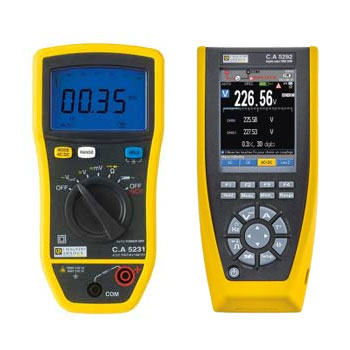
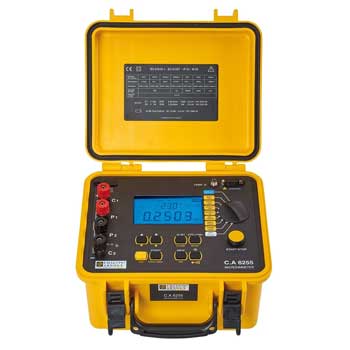
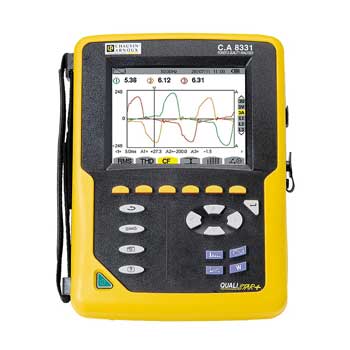
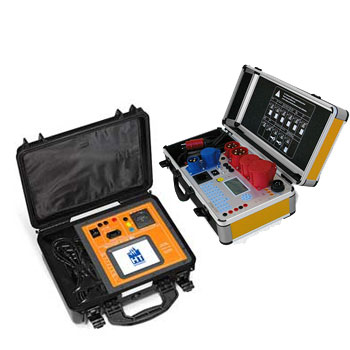


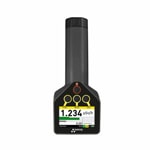
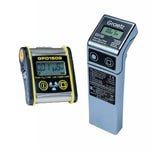
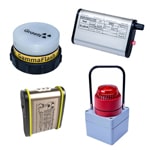
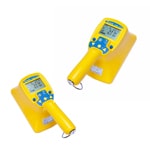
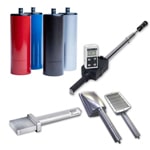
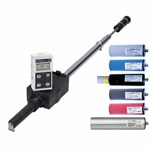
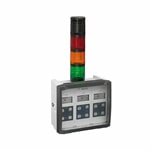
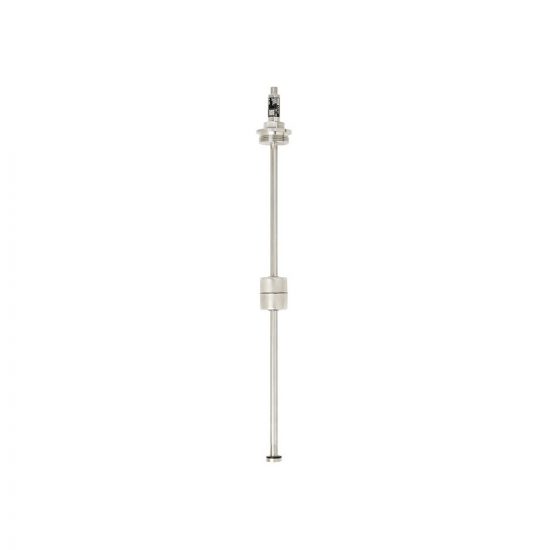
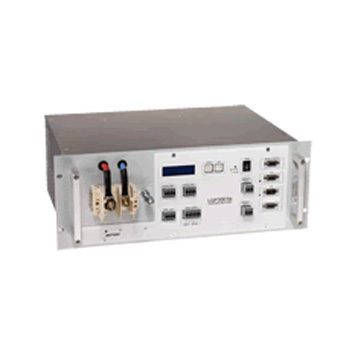
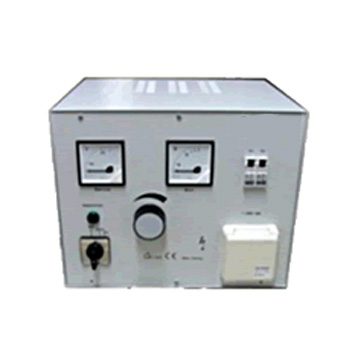
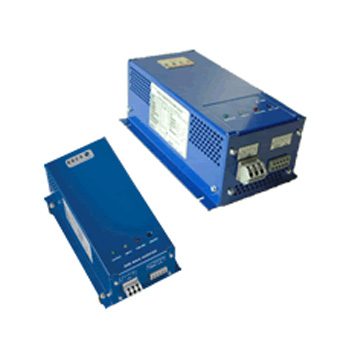
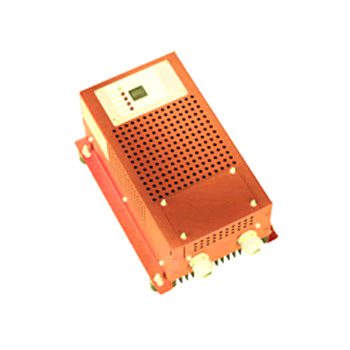























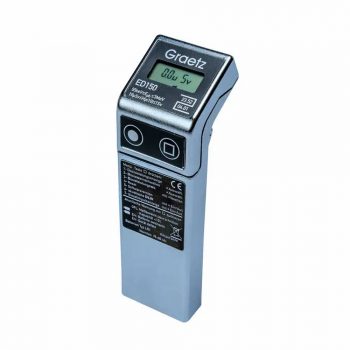
- Calibratable dosimeter for measuring gamma and X-ray radiation for the measurand Hp(10) (deep personal dose)
- Detector: Energy-compensated Geiger-Müller counter tube
- Optimum reading of measured values due to digital measured value display on angled LC display
- Dose rate display at the touch of a button
- Switchable acoustic single pulse detection
- Menu-driven operator guidance
- Storage of the dose value and the set parameters even when the battery is changed
- 4 factory-set warning thresholds each for dose and dose rate (factory setting of customer-specific warning thresholds on request)
- High reliability due to test function and continuous self-monitoring
- Small, handy housing, well decontaminable
- Waterproof up to 0.5 m diving depth, protection class IP67
- Operating time approx. 1 year with one set of batteries under ambient radiation conditions
Optional: PV-EDW test device and PS 9 test source for extending calibration validity to 6 years
 Datasheet Datasheet |
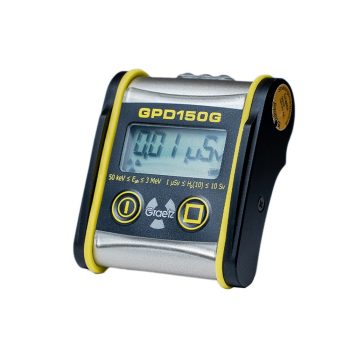
- Dosemeter for measuring gamma and X-ray radiation for the measurand Hp(10) (deep personal dose)
- Detector: Energy-compensated Geiger-Müller counter tube
- Switchable acoustic single pulse detection
- Menu-driven operator guidance
- Storage of the dose value and the set parameters even when the battery is changed
- Four factory preset dose warning thresholds
- Factory preset dose rate warning threshold
- Visual and audible warning
- High reliability due to constant self-monitoring
- Small, handy housing, well decontaminable, protection class IP54
- Operating time with one set of batteries in ambient radiation approx. 1 month in 24 h operation and 3 months in 8 h operation
- Audible battery warning
- Mounting clip and device bag included
| Datasheet |

Dose & Dosimetry Instruments for Radiation Protection & Measurement
Dose and dosimetry instruments (commonly referred to as “dosimeters”) are devices for measuring the radiation dose or dose rate of ionizing radiation. They quantify how much radiation is absorbed over time or what the ambient dose rate is — used for personnel protection, environmental monitoring, process control or safety/quality checks. Depending on the type, they either show the instantaneous dose rate or record the cumulative dose over a certain period. :contentReference[oaicite:11]{index=11}
Questions & Answers on Dose & Dosimetry Instruments
What is a dosimetry instrument / dosimeter?
A dosimetry instrument — or dosimeter — is a device that measures ionizing radiation and either accumulates the received dose over time (cumulative dosimeter) or measures current dose rate / ambient dose (dose-rate meter). :contentReference[oaicite:12]{index=12}
What are common applications for dosimetry instruments?
They are used in occupational radiation protection (e.g., in medicine, research, nuclear industry), environmental monitoring, control of radioactive sources, quality control in irradiation processes, and generally wherever radiation exposure must be monitored or documented. :contentReference[oaicite:13]{index=13}
Which types of dosimeters exist?
There are passive dosimeters (such as film-badge dosimeters, thermoluminescent dosimeters, OSL dosimeters) that are evaluated after exposure, and active / electronic dosimeters that provide real-time readout, accumulated dose tracking and often alarm functions. :contentReference[oaicite:14]{index=14}
How does a passive dosimeter work?
A passive dosimeter records exposure over the wearing period. For film-badge dosimeters a photographic film darkens proportionally to radiation dose; in thermoluminescent dosimeters (TLD) crystals store energy and release it as light during readout, which is used to calculate the absorbed dose. :contentReference[oaicite:15]{index=15}
How do electronic / active dosimeters work?
Electronic dosimeters measure radiation in real-time, display current dose rate and accumulated dose, and can warn the wearer acoustically or visually when preset thresholds are exceeded. They are especially useful for occupational environments with variable or elevated radiation. :contentReference[oaicite:16]{index=16}
What dose quantities and units are used?
Depending on application, quantities like absorbed dose (e.g., in Gray, Gy), equivalent dose or personal dose (e.g., in Sievert, Sv or µSv) and dose rate (e.g., Sv/h, µSv/h) are measured. These values help assess biological impact or exposure level. :contentReference[oaicite:17]{index=17}
Who uses dosimeters?
Personal dosimeters are worn by individuals potentially exposed to ionizing radiation — e.g., in medicine, research, nuclear facilities or radiation-control tasks. They are also used in environments with possible radiation exposure, such as environmental testing or work near radioactive materials. :contentReference[oaicite:18]{index=18}
Why are dosimeters important?
Ionizing radiation can damage biological systems; risk depends on the dose received. Dosimeters enable monitoring, documentation and enforcement of exposure limits so that radiation exposure remains controlled and health hazards are minimized. :contentReference[oaicite:19]{index=19}
How often should dosimeters be used or read out?
Passive dosimeters (e.g., film-badge, TLD) are typically evaluated after the period of use — e.g., monthly or after completion of radiation-exposed duties. Electronic dosimeters supply continuous data and may be worn permanently. The frequency depends on exposure, regulations and task environment. :contentReference[oaicite:20]{index=20}
What additional requirements apply to dosimetry instruments?
Dosimetry instruments must be calibrated, robust against environmental influences (temperature, humidity), ideally energy-range broad and — for personal dosimeters — provide reliable, traceable documentation of dose. Electronic devices often include alarm and continuous monitoring functions. :contentReference[oaicite:21]{index=21}