








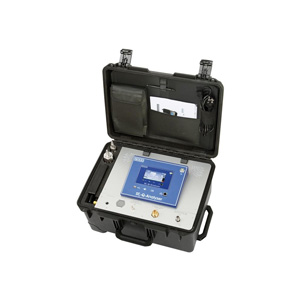
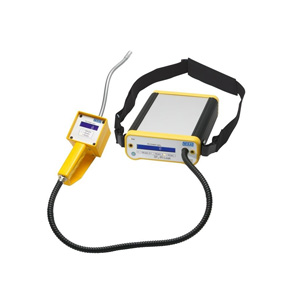
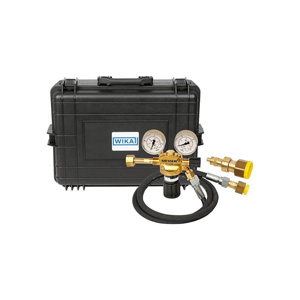
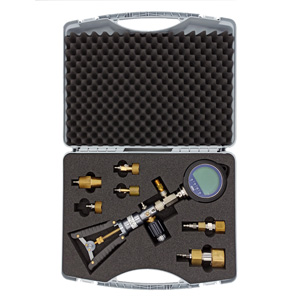
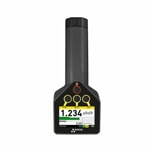
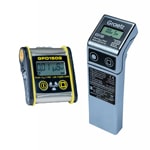
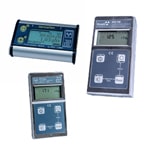
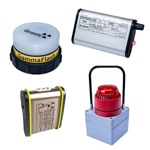
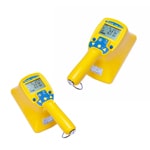
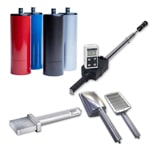
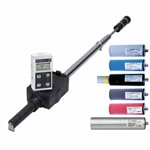





















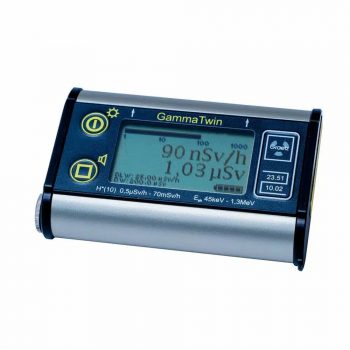
- Small, handy, calibratable dose rate meter for measuring gamma and X-ray radiation for the measurands Ḣ*(10) ambient dose equivalent rate and ambient dose equivalent H*(10) (to record the personal dose, a meter with the measurand Hp(10) must be used).
- Detector: Energy-compensated Geiger-Müller counter tube
- Large, digital measured value display on LC display (backlit)
- Optional simultaneous or separate dose and dose rate display, additional analog display of dose rate as logarithmic bar display
- 4 factory preset warning thresholds for dose and dose rate; customer-specific modification on request.
- Switchable acoustic single pulse detection
- Automatic continuous storage of the dose in a non flüchtiger memory.
- Storage of the dose and the set parameters even when the battery is changed
- Constant self-monitoring
- Designed for rough use, aluminum housing, protection class IP54 (splash-proof)
- Menu-driven operator guidance
- Durable nylon belt pouch is included in delivery
Optional: Test device PV-GTw and test source PS 9 for calibration validity extension to 6 years
 Datasheet Datasheet |
- Small, handy, calibratable dose rate meter for measuring gamma and X-ray radiation for the measurands Ḣ*(10) ambient dose equivalent rate and ambient dose equivalent H*(10) (to record the personal dose, a meter with the measurand Hp(10) must be used).
- Detector: Energy-compensated Geiger-Müller counter tube
- Large, digital measured value display on LC display (backlit)
- Optional simultaneous or separate dose and dose rate display, additional analog display of dose rate as logarithmic bar display
- 4 factory preset warning thresholds for dose and dose rate; customer-specific modification on request.
- Switchable acoustic single pulse detection
- Automatic continuous storage of the dose in a non flüchtiger memory.
- Storage of the dose and the set parameters even when the battery is changed
- Constant self-monitoring
- Designed for rough use, aluminum housing, protection class IP54
- Menu-driven operator guidance
- Durable nylon belt pouch is included in delivery
- Connection option for an external pulse probe:
- 18526 D or ABG170 for contamination measurement (α, β, γ)
- Immersion probe ZP1083 D (β, γ)
- NaI scintillation probe 2002 for high-sensitivity measurements (β, γ)
- With the probe connected:
- Measured value display in Ips
- Display of the temporal course of the pulse rates as a search function for tracing radioactive sources or contamination possible
- Preselectable pulse rate warning threshold: double or triple zero effect
| Datasheet |
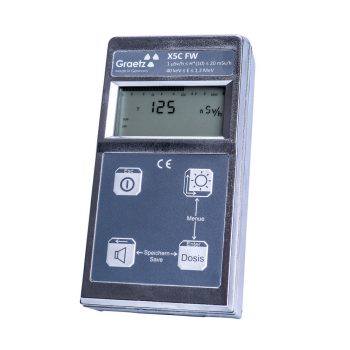
- Dose rate meter for measuring gamma and X-ray radiation for the measurand Ḣ*(10) ambient dose equivalent rate.
- Detector: Energy-compensated Geiger-Müller counter tube
- Large digital measured value display on LC display (illuminable)
- Optional dose rate or dose display with integration time
- Additional quasi-analog display of dose rate (3.5 decades, logarithmic bar display)
- Display of the dose rate peak value and the dose rate mean value
- 4 freely programmable dose and dose rate warning thresholds
- Warning thresholds adapted for use by fire departments
- Automatic and manual storage of measured values together with date and time
- Dwell time/residual time determination
- Switchable acoustic single pulse detection
- Menu-driven operator guidance
- Release of the menu items for the device settings only possible with the aid of optionally available PC software
- Storage of the set parameters even when the device is switched off or the battery is changed
- High reliability due to test function and continuous self-monitoring
- Metallized plastic housing, well decontaminable, protection class IP67
- RS-232 interface
- Can be combined directly or via probe cable with various probes (see GRAETZ probe program):
- Measuring range extension up to 10 Sv/h
- For the detection of α-, β- and γ-radiation
- For fluid testing
- For measurements in hard-to-reach places
- DE telescopic probe for measurements from a safe distance
- Scintillation probe 2002 for measuring low dose rates
- Using the probes of the GRAETZ “CE” program
Optionally available:
- PC software for configuring the warning thresholds, reading out and exporting the stored measured values and locking/unlocking menu items
- Car charging cradle
| Datasheet |
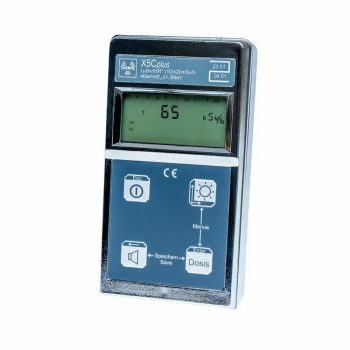
- Calibratable dose rate meter for the measurement of gamma and X-ray radiation for the measurand Ḣ*(10) ambient dose equivalent rate.
- Detector: Energy-compensated Geiger-Müller counter tube
- Large digital measured value display on LC display (illuminable)
- Optional dose rate or dose display with integration time
- Additional quasi-analog display of dose rate (3.5 decades, logarithmic bar display)
- Display of the dose rate peak value and the dose rate mean value
- 4 freely programmable dose and dose rate warning thresholds
- Automatic and manual storage of dose rate readings together with date and time
- Dwell time/residual time determination
- Switchable acoustic single pulse detection
- Menu-driven operator guidance, partially password-protected
- Storage of the set parameters even when the device is switched off or the battery is changed
- High reliability due to test function and continuous self-monitoring
- Metallized plastic housing, well decontaminable, protection class IP67
- RS-232 interface
- Can be combined directly or via probe cable with various probes (see brochure “Probe program”):
- Measuring range extension up to 10 Sv/h –
- For the detection of α-, β- and γ-radiation
- For fluid testing
- For measurements in hard-to-reach places
- DE telescopic probe for measurements from a safe distance
- Scintillation probe 2002 for measuring low dose rates
- In custody transfer applications, the probes of the GRAETZ “CE” program are used
| Datasheett |
| Datasheet SE |

Dose Rate Meters for Gamma and X-Ray Radiation
Dose rate meters measure the ambient dose equivalent rate H*(10) in the presence of gamma and X-ray radiation and are used for radiation protection in industry, medical applications, fire brigades and nuclear facilities. Energy-compensated Geiger-Müller tubes or scintillation detectors provide a wide measurement range from natural background levels up to high dose rates, while acoustic and optical alarm thresholds warn the user in time before critical situations occur.
Frequently Asked Questions about Dose Rate Meters
Which quantity do dose rate meters typically measure?
Most dose rate meters measure the ambient dose equivalent rate H*(10) in sievert per hour (e.g. µSv/h or mSv/h) and often also the integrated ambient dose equivalent H*(10) in sievert. These quantities are directly related to human radiation protection and are required by standards and type approvals.
Which types of radiation can be measured with dose rate meters?
Standard dose rate meters are primarily designed for gamma radiation and high-energy X-rays. Depending on detector type and energy compensation, there may be limited sensitivity to beta radiation. Alpha radiation is usually detected with dedicated contamination probes rather than with a pure dose rate meter.
Which detector technologies are used in dose rate meters?
Typical detectors are energy-compensated Geiger-Müller tubes for robust operation and a wide measuring range, as well as scintillation detectors (e.g. NaI(Tl)) for very high sensitivity in the low dose rate range. Some instruments additionally support neutron sensors or external probes to extend the measurement range or energy coverage.
In which units are dose rate and dose displayed?
Dose rate is usually displayed in µSv/h, mSv/h or Sv/h, depending on the measuring range of the instrument. The integrated dose is mostly indicated in µSv or mSv. Modern instruments automatically select a suitable unit and scale the measured value over several decades.
What are typical measuring ranges of portable dose rate meters?
Portable dose rate meters commonly cover a range from natural background levels, for example starting at about 0.05 µSv/h, up to several sievert per hour. The exact range depends on the detector and instrument design; for fire brigades and disaster response, measuring ranges up to at least 10 Sv/h are typically required.
What does energy compensation of a Geiger-Müller tube mean?
An energy-compensated Geiger-Müller tube is equipped with a special shielding and design that corrects the energy dependence of the detector. As a result, the instrument provides an almost energy-independent dose rate reading over a wide photon energy range, for example from about 40 keV to 1.3 MeV.
What is the purpose of alarm thresholds for dose and dose rate?
Alarm thresholds are user-defined limits for dose rate and integrated dose. When a threshold is exceeded, the instrument issues optical and acoustic alarms. This enables the user to limit stay times, comply with operational limits and keep personal dose limits under control.
Which additional functions do modern dose rate meters offer?
Modern dose rate meters often include features such as peak-hold for dose rate, mean value calculation, stay time or remaining time calculation, data logger with time stamp, self-test functions, backlit display, single pulse indication and interfaces (e.g. RS-232 or USB) for data transfer to a PC or command software.
What is the difference between an area dose rate meter and a personal dosimeter?
An area dose rate meter measures the ambient dose equivalent rate H*(10) at a location and is used for area monitoring. A personal dosimeter, in contrast, measures the personal dose or personal dose rate Hp(10) directly on the worker’s body and is primarily intended for individual exposure monitoring.
Which requirements apply to the calibration of dose rate meters?
Dose rate meters must be calibrated regularly in accredited laboratories or test facilities. Typical calibration intervals range from 2 to 5 years, depending on standards, legal requirements, application and the quality management system. Calibration is performed using reference radiation fields with defined energy and dose rate.
What does ‘suitable for legal metrology’ or ‘approvable’ mean for dose rate meters?
Instruments suitable for legal metrology fulfill statutory requirements regarding accuracy and stability and can be officially verified by certified authorities. Verification confirms that the instrument measures within specified tolerances and may be used for official or regulatory measurements.
Which protection class and mechanical robustness are important for field use?
For fire brigades, disaster control and industrial applications, robust housings with protection classes such as IP54 or higher are preferred. Shock-resistant, splash-proof and chemically resistant designs ensure reliable operation under harsh environmental conditions.
When are external probes for dose rate meters useful?
External probes are useful for special tasks such as surface contamination measurements, measurements in narrow or hard-to-reach places, or highly sensitive measurements in the low dose rate range. With appropriate probes, α, β and γ radiation can be detected individually or in combination.
How long is the typical battery lifetime of portable dose rate meters?
Battery lifetime depends on the instrument, power supply type and operating conditions. Many dose rate meters achieve operating times from several hundred up to several thousand hours, particularly when energy-saving displays, optimized measurement cycles and economical use of the backlight are employed.
Which display formats are used to show dose rate?
In addition to the numerical indication on the LC display, many instruments provide a quasi-analog bar graph over several decades. This logarithmic display helps the user to quickly recognize trend changes, especially with dynamic dose rate profiles.
What is the role of self-monitoring in dose rate meters?
Integrated self-monitoring continuously checks functions such as high voltage supply, detector pulses, memory and electronics. In case of faults or deviations, the instrument signals an optical or acoustic warning. This ensures that the user can rely on the measurement results in critical applications.