


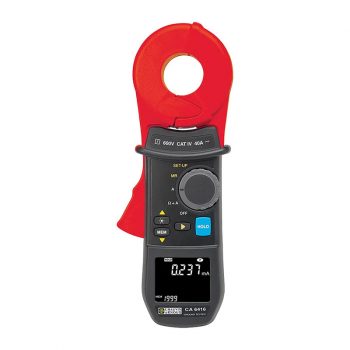
- Large measurement range: 1,500 Ω / 500 µH / 40A
- Alarms on Ω, A and V
- Automatic Pre-Hold mode when the clamp is opened
- 300 storage locations
- Real-time clock for time/date-stamping of measurements
- Automatic calibration of jaw opening distance at start-up
- Buzzer and automatic power-off
 Datasheet Datasheet |
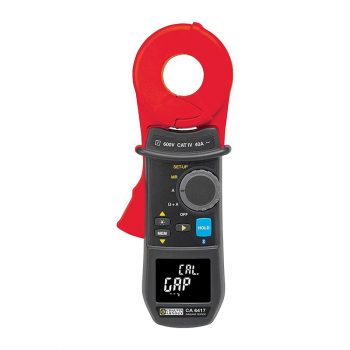
- Large measurement range: 1,500 Ω / 500 µH / 40A
- Alarms on Ω, A and V
- Automatic Pre-Hold mode when the clamp is opened
- 2,000 storage locations
- Real-time clock for time/date-stamping of measurements
- Automatic calibration of jaw opening distance at start-up
- Buzzer and automatic power-off
- Bluetooth communication interface
- GTC data transfer software
| Datasheet |
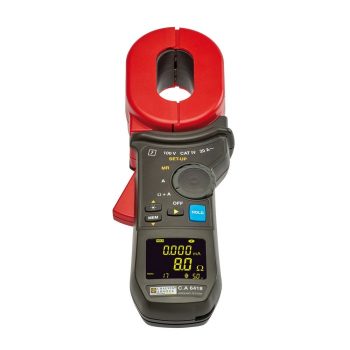
- Wide measurement range from 0.010 Ω to 1200 Ω
- Current from 0.5 mA to 20 A
- Alarms configurable for Ω and A
- Automatic Pre-Hold mode when the clamp is opened
- 300 time/date-stamped measurements
- Automatic calibration of the jaw gap at power-up
- Buzzer and automatic power-off
| Datasheet |
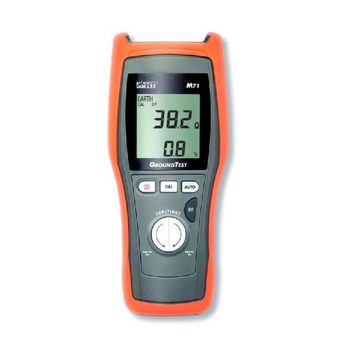
- 3-wire Earth Resistance
- 2-wire Earth Resistance
- Measurement range up to 50kOhm
- Calibration of test cables
- Automatic regulation of noise voltage disturbances
|
Datasheet
|
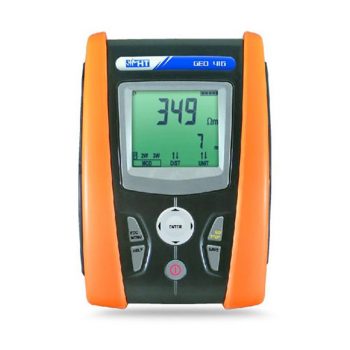
GEO416 measures earth resistance with 2 wires, 3 wires and 4 wires by voltammetric method and ground resistivity with storage and download capabilities.
|
Datasheet
|
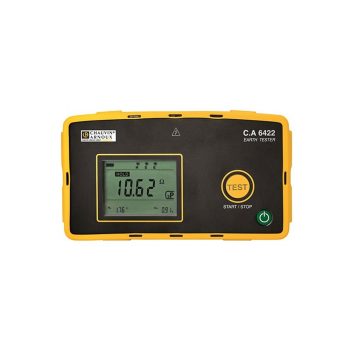
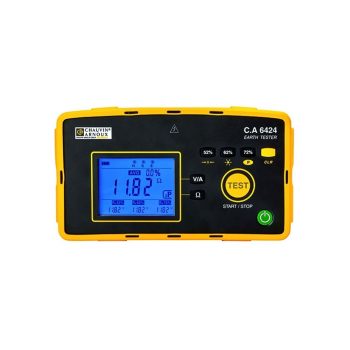
- 2P resistance / 3P earth measurements up to 50 kΩ in high-resistivity terrain
- Voltage measurement up to 600 V and RH stake resistance measurement
- Automatic stabilization of the measurement
- Help with positioning the stakes – average and 52%/62%/72% deviation
- Leakage current measurement from 0.5 mA
- Battery recharging via the mains, USB socket or vehicle cigarette lighter
|
Datasheet
|
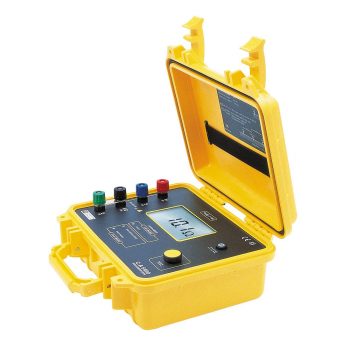
- 3-in-1 tester: resistivity, earth, coupling between two earths
- measurement range: 0.01 to 2,000 Ω (3 automatic ranges)
- change from 4-wire method to 3-wire method thanks to 1 removable captive bar between E and ES
- 3 fault presence indicators to validate measurement
- measurement frequency: 128Hz
- easy connection of stakes by means of colour-coded terminals
- large backlit digital display with 2,000 counts
- power supply: 8 x 1.5V batteries for an average battery life, constantly checked, of 4,500 measurements of 15s each
- IP53 leakproof case with folding cover and carrying handle
- compliant with IEC 61557 -1 and -5
- electrical safety: EN 61010
- dimensions: 273 x 247 x 127mm - weight: 2.8kg
|
Datasheet
|
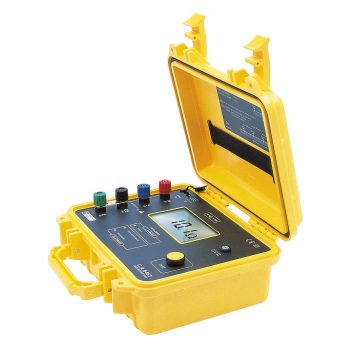
- 3-in-1 tester: resistivity, earth, coupling between two earths
- measurement range: 0.01 to 2,000 Ω (3 automatic ranges)
- change from 4-wire method to 3-wire method thanks to 1 removable captive bar between E and ES
- 3 fault presence indicators to validate measurement
- measurement frequency: 128Hz
- easy connection of stakes by means of colour-coded terminals
- large backlit digital display with 2,000 counts
- power supply: NiMH rechargeable battery for an average battery life, constantly checked, of 1,180 measurements of 15s each
- IP53 leakproof case with folding cover and carrying handle
- compliant with IEC 61557 -1 et -5
- electrical safety: EN 61010
- dimensions: 273 x 247 x 127 mm - weight: 2.8 kg
|
Datasheet
|
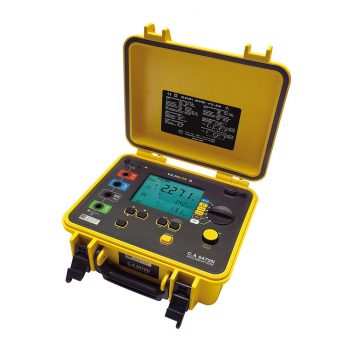
The C.A 6470N guarantees the reliability of measurements carried out by:
- traditional stake-based methods
- self-diagnosis when each measurement starts, so that any faults liable to affect the measurements (bad connections or presence of disturbance signals) are indicated
- extensive measurement ranges: 0.001 Ω to 100 kΩ
- adjustment of the measurement frequency between 41 Hz and 512 Hz (3P & 4P measurements)
- for earth coupling measurements, simply perform the 3 succesive measurements required and the tester then calculates the coupling coefficient automatically
- for soil resistivity measurements, simply program the distances used for the measurement and the instrument automatically calculates r using the Wenner or Schlumberger methods.
- Power supply: NiMh rechargeable battery with external charger
- IP53 protection
- Compliant with IEC 61557 -1 -4 -5
- Safety: IEC 61010 50V CAT IV
- Dimensions: 272 x 250 x 128 mm, 3 kg
|
Datasheet
|

The C.A 6471 guarantees the reliability of measurements carried out by:
- traditional stake-based methods
- self-diagnosis when each measurement starts, so that any faults liable to affect the measurements (bad connections or presence of disturbance signals) are indicated
- extensive measurement ranges: 0.001 Ω to 100 kΩ
- adjustment of the measurement frequency between 41 Hz and 512 Hz (3P & 4P measurements)
- for earth coupling measurements, simply perform the 3 successive measurements required and the tester then calculates the coupling coefficient automatically
- for soil resistivity measurements, simply program the distances used for the measurement and the instrument automatically calculates r using the Wenner or Schlumberger methods.
- Power supply: NiMh rechargeable battery with external charger
- IP53 protection
- Compliant with IEC 61557 -1 -4 -5
- Safety: IEC 61010 50V CAT IV
- Dimensions: 272 x 250 x 128 mm, 3 kg
|
Datasheet
|
- 3P measurement up to 10 kΩ and stray voltages up to 60 V RMS
- 4P and selective 4P measurement
- Earth loop measurement with 2 clamps from 0.01 Ω to 500 Ω
- Earth coupling measurement
- Soil resistivity measurement: simply program the distances used for the measurement and the tester then calculates r using the Wenner oe Schlumberger methods
- Ground potential measurement
- Continuity and resistance measurement
- Pylon earth measurement with the C.A 6474
- Storage of 512 test results
- USB optical link
- Ground Tester Transfer PC software to process the stored data
- Power supply: NiMh battery with external charger
- IP53 protection
- IEC 61557 -1 -4 -5
- IEC 61010 50V CAT IV
- Dimensions: 272 x 250 x 128 mm, 3 kg
|
Datasheet
|
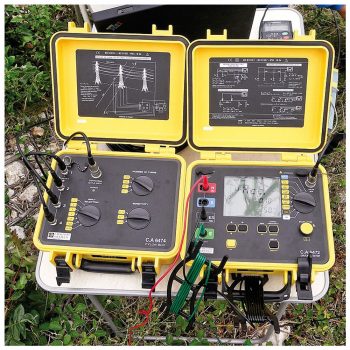
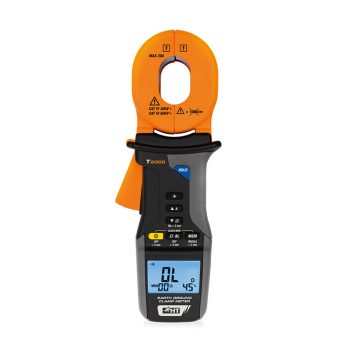
T2000 is a professional clamps specially developed to evaluate resistance of earth rods with no need to disconnect any part of the system (STAKELESS METHOD)
|
Datasheet
|
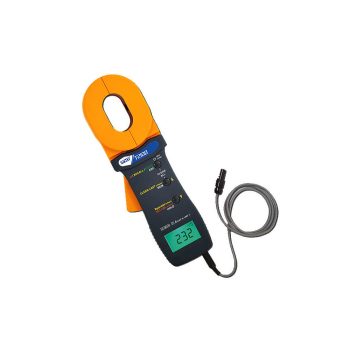
T2100 is a professional clamp specially developed to evaluate resistance of earth rods with no need to disconnect any part of the system.
|
Datasheet
|
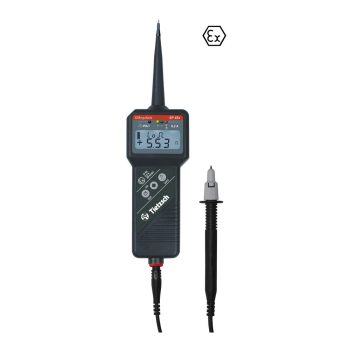
The ΩMegaSafe is a easy testing ohmmeter for rapid testing according to VDE 0413 of protective and earth cables, equipotential bonding and lightning protection cables. The EP 4Ex is approved for use in EX II areas.

| Datasheet |
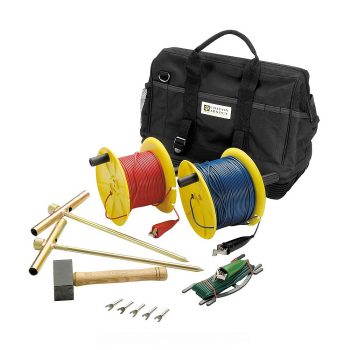
The Earth Kits are used with earth and resistivity testers implementing the 1P, 3P and 4P loop methods. The Earth Kits comprise 1, 2 or 4 stakes, 3 or 4 different-coloured reels of cables 50 m, 100 m or 150 m long, 1 mallet , 5 spade lug/banana plug adapters and a carrying bag. The 100 m resistivity add-on can be used to complete a 3P earth kit with 2 cable reels and two stakes. The continuity kit comprises 4 x 4 mm banana cables, 4 crocodile clips and 2 test probes.
|
Datasheet
|
|
User Manual
|

Earth & Ground Resistance Testers
Earth and ground resistance testers are devices used to verify the grounding quality of installations and to measure the resistance between an earthing point and the earth. They ensure that protective conductors, grounding systems, lightning protection or earthing potentials function properly and that fault currents can be safely discharged. They are essential for commissioning, maintenance, inspections, and periodic safety checks.
FAQ
What is an earth or ground resistance tester?
An earth or ground resistance tester measures the resistance of an earthing system or ground electrode to earth — i.e., how effective the grounding is and how well fault currents can be dissipated.
When should a grounding test be carried out?
Before commissioning new installations, after modifications or expansions, following repairs, during maintenance or at regular intervals as required by regulations or safety standards.
Which measurement methods are available?
Common methods include 3-point, 4-point or 2-point ground resistance measurements. For 3- or 4-point tests, auxiliary grounding rods are used to determine the true resistance of the main grounding electrode.
How does a 3-point ground resistance test work?
In a 3-point test two auxiliary rods (potential and current rods) are placed in the soil at defined distances from the main grounding point. A test current is passed through the setup and the resistance between the grounding point and earth is measured.
Which resistance values are generally considered acceptable?
Acceptable ground or electrode resistance depends on the system and applicable standards. Often values below a few ohms (e.g. less than 10 Ω) are regarded as acceptable — exact thresholds depend on regulations and installation requirements.
What does a high ground resistance indicate?
A high resistance can indicate insufficient grounding, poor soil conductivity, corroded or faulty connections, inadequate installation or environmental issues — potentially resulting in safety hazards.
What can distort the measurement results?
Moisture content of soil, dry or frozen soil, incorrect placement of rods, nearby metal objects, electrical interference or poor contact can all lead to inaccurate results.
How should the environment be prepared for measurement?
Remove metallic objects nearby, place auxiliary rods correctly and ensure good contact with soil. Avoid testing on frozen or extremely dry ground without noting conditions.
What test current or test voltage is used?
The device applies a defined test current between rods or electrodes — the current level must suit the grounding system and correspond to grounding standards to ensure reliability and safety.
How often should grounding measurements be repeated?
Frequency depends on usage, soil conditions, installation type and regulations — periodic checks every few years or after environmental changes are commonly recommended, especially for safety-critical installations.
How should measurement results be documented?
The record should include measured resistance, test method, date, measurement conditions (soil moisture, temperature), position of rods and tester, and any observations or corrective actions. This ensures traceability and proper evaluability.
For which installations is grounding measurement especially critical?
Grounding tests are crucial for electrical installations, switchgear, lightning protection systems, communication antennas, industrial facilities, telecom installations and any location requiring reliable protective earth connections.
What indicates a functioning grounding system?
Low resistance value, reproducible results on repeated measurement, correct and solid connections, visible and verified grounding conductors and compliance with required grounding standards.
What should be done if measurement indicates poor grounding?
The grounding installation or electrode must be inspected: check connections, replace corroded parts, improve soil contact or add supplemental grounding, then repeat the measurement to verify improvement.
Is grounding test possible on wet or frozen soil?
Yes — but results may vary widely. Soil condition should be documented, and measurements evaluated accordingly — additional tests or retests under different conditions may be needed for reliable assessment.
What distinguishes basic from professional grounding testers?
Professional testers offer precise measurement, stable test currents, advanced grounding test modes, data logging, better resistance resolution and robustness, improving reliability especially under difficult soil conditions.
Which safety rules apply during grounding measurements?
Ensure test rods are firmly inserted, no persons or animals touch electrodes during measurement, circuits are de-energized, and proper protective gear is used. Conduct tests in safe, controlled environment.
Can a grounding tester detect missing or non-functional ground?
Yes — very high resistance readings or no measurable ground connection indicate missing or insufficient grounding, which requires immediate correction to ensure safety.