






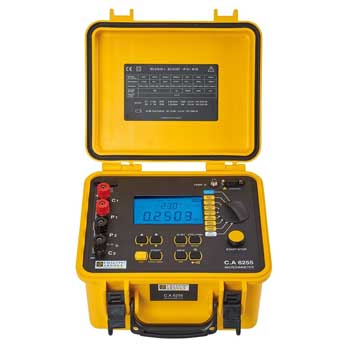


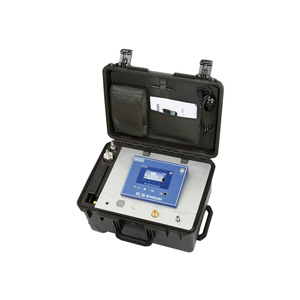
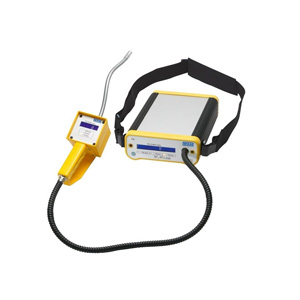
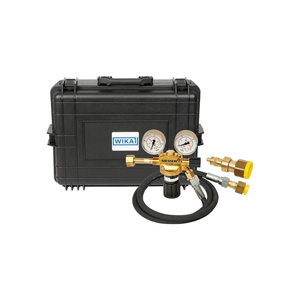
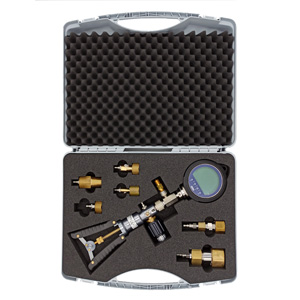
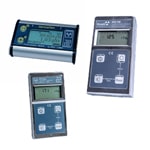
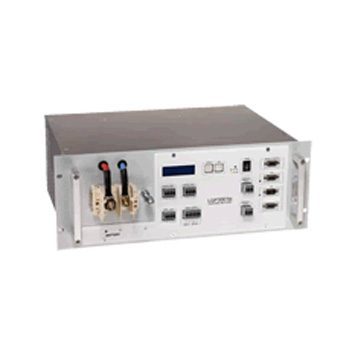






























- Ultra lightweight (6.9kg)
- 1-200Adc test current with <2.5% ripple
- Supplied with standard 3m output lead set
- 0.1μΩ resolution
- mV, A, and m/μΩ displayed simultaneously
- USB memory key for data storage
- USB keyboard for comment entry
- Pre-settable test current with three buttons to store user test currents
- Large back-lit liquid crystal display
- Universal supply voltage 90-264V
- Optional current clamp to allows testing of objects with both sides earthed
 Datasheet Datasheet
|
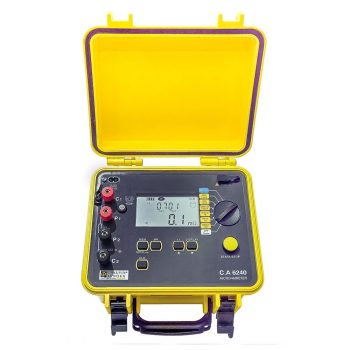
C.A 6240 technical specifications:
- 4-wire measurement method
- measurement ranges from 400 µΩ to 400 Ω
- Test current up to 10 A
- Max. resolution 1 µΩ
- Automatic power off
- Power supply: NiMH rechargeable battery
- Storage: 100 measurements
- Communication via USB optical link
- Data export software
- IP53 protection
- Electrical safety: IEC 61010-1 CAT III 50 V
- Dimensions: 273 x 247 x 280 mm
- Weight: 5 kg
 Datasheet Datasheet |
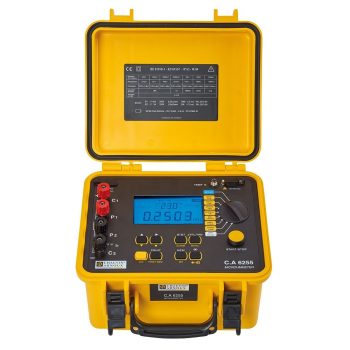
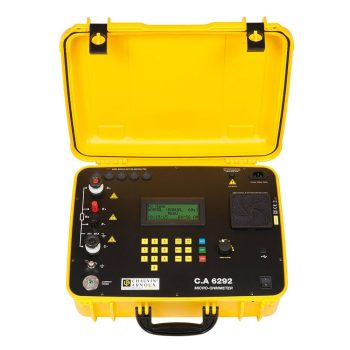

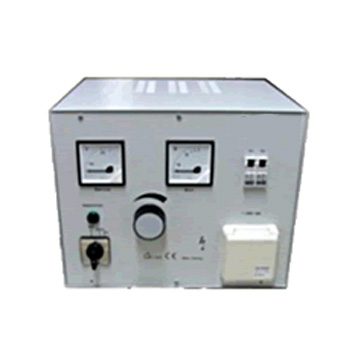
- Ultra lightweight (19.7g)
- 10-600Adc test current with <2.5% ripple
- 0.1μΩ resolution
- mV, A, and m/μΩ displayed simultaneously
- USB memory key for data storage
- USB keyboard for comment entry
- Pre-settable test current with three buttons to store user test currents
- Large back-lit liquid crystal display
- Universal supply voltage 90-264V
- Supplied with 3m output lead set
- Optional current clamp to allows testing of objects with both sides earthed
|
Datasheet
|

Resistance Testers / Micro-Ohmmeters
Resistance testers and micro-ohmmeters are instruments designed to measure very low resistances and contact or connection resistances — for example in busbars, welds, grounding systems, contacts or cable joints. They provide precise measurements in the milliohm to micro-ohm range and are used in electrical engineering, switchgear testing, quality assurance, maintenance and inspection tasks.
FAQ
What is a micro-ohmmeter?
A micro-ohmmeter is a resistance measuring device optimized for very low resistances (from milliohm down to micro-ohm). It typically uses a defined test current and a four-wire (Kelvin) measuring method to exclude lead and contact resistances from the measurement.
Why are such instruments needed?
Low and contact resistances are critical for reliable electrical connections, grounding, switchgear and safety circuits. Accurate measurement ensures contact integrity and prevents overheating or failures.
How does the four-wire measuring method work?
The four-wire method uses two wires to supply the test current and two separate wires for measuring voltage. This eliminates the influence of the test lead resistance and yields the true resistance of the part under test.
What resistance ranges are covered?
Depending on the model, ranges span from a few micro-ohms up to several ohms. Some instruments offer multiple ranges for different sensitivity levels.
Which test currents are used?
Micro-ohmmeters apply moderate to relatively high test currents (often in the ampere range) to minimize measurement errors caused by contact resistances and to ensure stable readings.
What accuracy can be achieved?
High-quality instruments achieve high accuracy — often only a few percent deviation or absolute error tolerances in the low milliohm/ micro-ohm range.
In which applications are micro-ohmmeters typically used?
They are used for testing switchgear, busbars, weld joints, grounding systems, motor connections, relay contacts, power connections and power-equipment terminations.
What must be prepared before measurement?
The contact surfaces should be clean, free of oxidation or corrosion, mechanically fixed and stable to ensure reproducible results.
How does environment affect the measurement?
Magnetic fields, temperature, vibrations or unstable connections can influence the accuracy. A stable, low-interference environment improves result reliability.
How is the test current applied correctly?
The set current must match the device specification and must not exceed contact ratings. Test leads must be properly connected and for DC-measurements proper polarity should be observed; for AC-measurements, applicable settings must be used.
How long does a measurement take?
Usually only a few seconds to a few tens of seconds. After a stable reading is reached, value should be recorded — long test durations can heat contacts and distort results.
Are there special methods for contact resistance measurement?
Yes — methods include pulse current tests, short test durations to avoid heating, four-wire measurement and repeated measurements to average out noise or contact fluctuations.
How should measurement results be documented?
Include all relevant conditions: test current, temperature, contact state, date/time, operator. Dokumentation ist besonders wichtig bei sicherheitsrelevanten oder zertifikationspflichtigen Anlagen.
Which safety and protection requirements apply?
The device must be suitable for the expected voltage/environment. Measurements should only be done on de-energized circuits to avoid risk of electric shock or damage.
How are micro-ohmmeters maintained and serviced?
Check test leads and connections, clean contacts, verify current source stability; periodic calibration is recommended to maintain accuracy.
When is recalibration required?
Depending on usage and regulation, an annual or biennial calibration cycle is common, especially if measured values are used in official documentation or for quality assurance.
What are the differences between basic and professional instruments?
Professional instruments offer better accuracy, stable current output, true four-wire measurement, robust connectors, enhanced shielding and often data-logging or reporting functions.
How to deal with very low measured resistances reliably?
Ensure contact cleanliness, stable test current, proper lead connections, repeated measurements and average value calculation for reproducible results.
Can a micro-ohmmeter also measure higher resistances?
Many devices offer multiple measurement ranges and can also measure higher resistances, provided the correct range is selected to keep measurement accuracy acceptable.