




































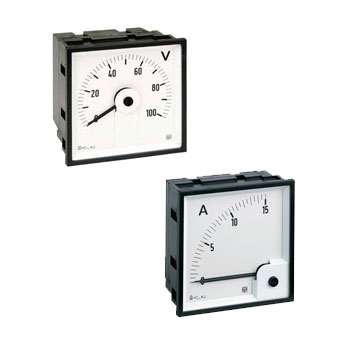
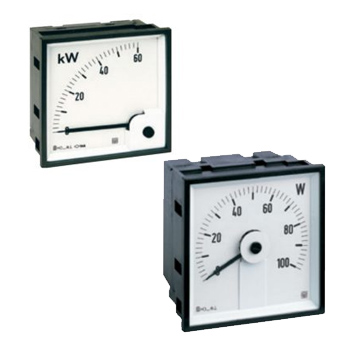
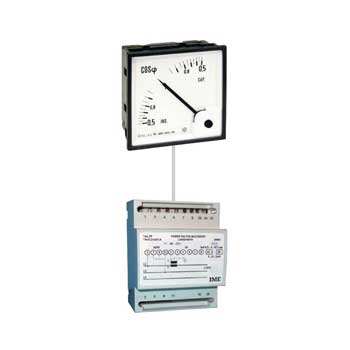

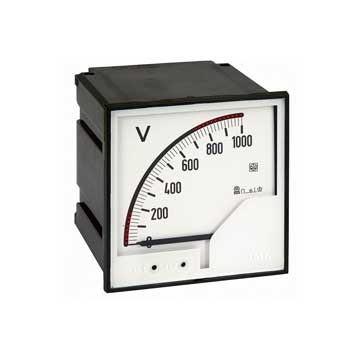

Analog Built-in Meters for Switchgear & Control Cabinets
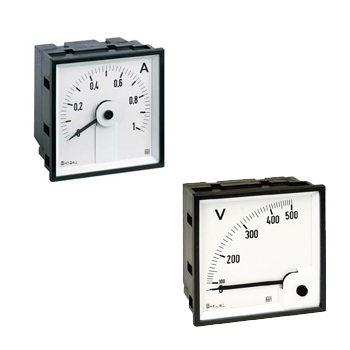
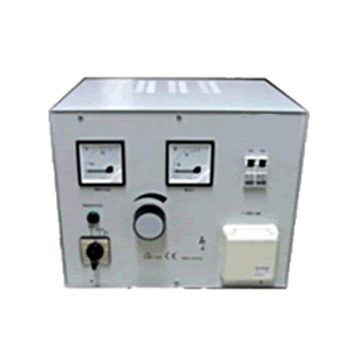
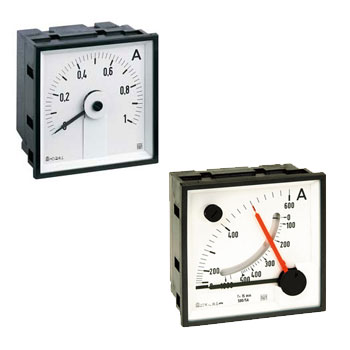
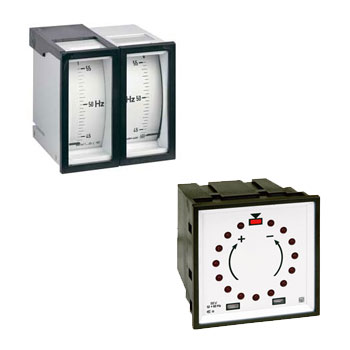
Analog built-in meters are instruments designed to permanently display electrical parameters — such as voltage, current, frequency or power — via a needle and dial, and are installed directly in switchgear panels, control cabinets or machine control boards. These meters provide a simple, continuous visual indication of electrical quantities without digital conversion or external power supply, making them especially suitable for industrial control, distribution and monitoring applications. Despite digital dominance, analog built-in meters remain valued for their immediacy, reliability and straightforward design. :contentReference[oaicite:11]{index=11}
What is an analog built-in meter?
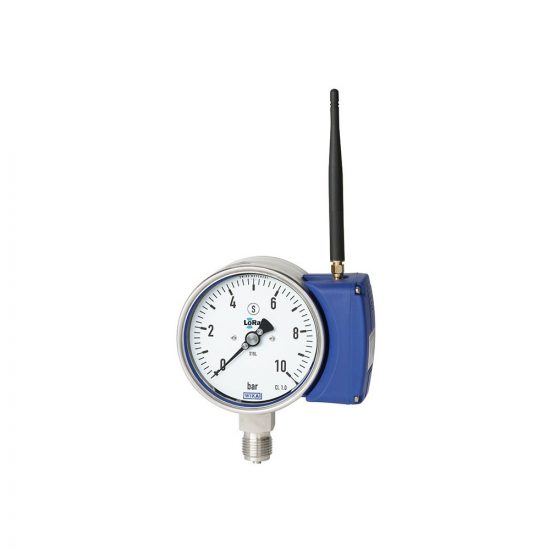
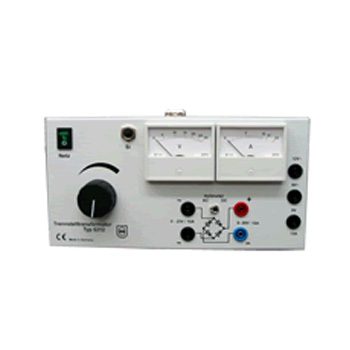
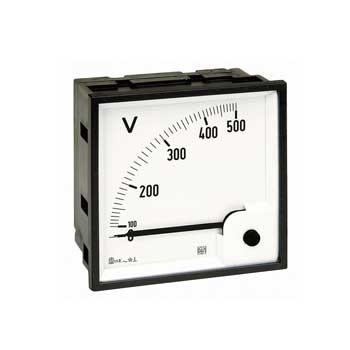
An analog built-in meter is a panel-mounted instrument that displays electrical parameters such as voltage, current, frequency or power by means of a pointer moving over a calibrated scale. No digital display is used — the measurement is shown in real time, directly and continuously. This simplicity reduces dependency on auxiliary power and electronics. :contentReference[oaicite:12]{index=12}
Which electrical quantities can be displayed?
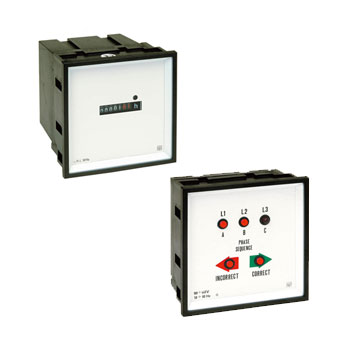
Typical quantities include AC or DC voltage (V), current (A), frequency (Hz), active or apparent power, phase conditions, power factor, and similar electrical measurements. Some devices are dedicated to a single parameter, others can be configured for different parameters depending on the internal movement and wiring. :contentReference[oaicite:13]{index=13}
How does the analog movement mechanism work?
The meter movement consists of a coil or magnetic element that responds to the electrical input. The resulting magnetic interaction causes the pointer to deflect over the scale. For DC measurements typically a moving-coil mechanism is used; for AC or mixed parameters often moving-iron (Dreheisen) or bimetal mechanisms are employed. :contentReference[oaicite:14]{index=14}
What are the advantages of analog built-in meters?
They instantly reflect changes and fluctuations in the measured quantity — useful for observing dynamic behavior or irregular loads. They are rugged, resistant to electromagnetic interference, do not require an external power supply, and have long service life. The reading is intuitive and easily visible even aus distance or im Überblick. :contentReference[oaicite:15]{index=15}
Where are analog built-in meters typically used?
They are employed in control cabinets, distribution panels, switchgear, industrial machinery, energy distribution stations, and other installations where a continuous visual overview of electrical parameters — such as voltage or current — is required. Also in applications where robustness, einfache Anzeige und wenig Aufwand wichtiger sind als maximale Präzision. :contentReference[oaicite:16]{index=16}
Which form factors and sizes exist?
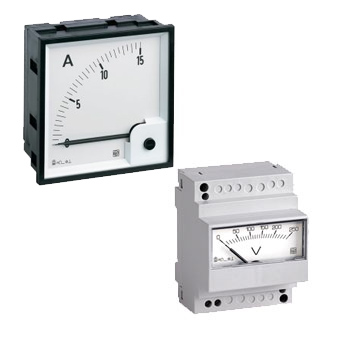
Analog panel meters come in standard front sizes like 48×48 mm, 72×72 mm, 96×96 mm, 144×144 mm and in schmalen Formaten (z. B. 48×24 mm, 72×24 mm, 96×24 mm) für Hutschienen oder schmale Einbauplätze. Manche sind für Frontplatten, andere für Hutschienen- oder Gehäuseeinbau vorgesehen. :contentReference[oaicite:17]{index=17}
What are the limitations and disadvantages of analog meters?
The precision is often lower than digital instruments. Ablesefehler (z. B. durch Parallaxe), fehlende Messbereichsautomatik, keine Datenaufzeichnung und eingeschränkte Funktionalität können Nachteile sein. Außerdem reagieren sie empfindlich auf Überlastung oder falsche Verdrahtung. :contentReference[oaicite:18]{index=18}
For what kind of applications are analog built-in meters most suitable?
They are optimal for kontinuierliche Visualisierung von Spannungen, Strömen, Netzparametern oder Lastzuständen — überall dort, wo schnelle Einschätzung wichtiger ist als hochpräzise Messdaten. Besonders vorteilhaft bei pulsierenden Lasten, schwankenden Signalen oder wenn keine externe Stromversorgung für digitale Anzeigen gewünscht ist. :contentReference[oaicite:19]{index=19}
How do analog meters behave under varying or pulsating load?
Analog meters reflect Schwankungen und Signaländerungen in Echtzeit — der Zeiger folgt dem Signal und zeigt auch kurzzeitige Spitzen oder Lastwechsel an; das erlaubt eine gute Beurteilung von Zuständen, die bei digitalen Zentrierungen oder Mittelwertbildungen verborgen bleiben könnten. :contentReference[oaicite:20]{index=20}
What should be considered when selecting and installing analog built-in meters?
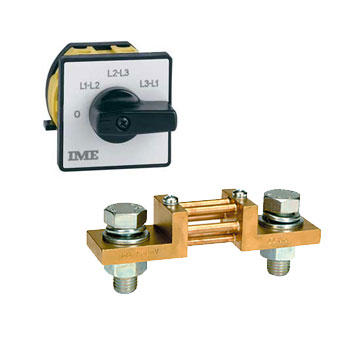
Entscheidend sind passende Messbereiche, Messwerk (für AC oder DC), korrekte Nennwerte, passende Einbaumaße, Schutzart (z. B. gegen Staub, Feuchtigkeit, Vibration), sowie Einhaltung relevanter Normen (z. B. über Überspannungskategorie und Schutzklasse). Die Anschlusswerte und Betriebsbedingungen müssen der vorgesehenen Anwendung entsprechen, um sichere und fehlerfreie Messung zu gewährleisten. :contentReference[oaicite:21]{index=21}