


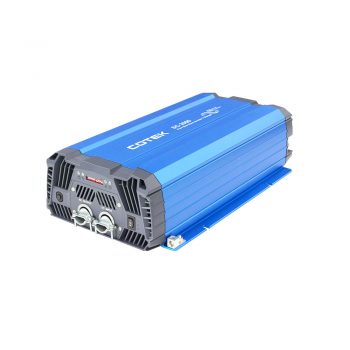
- COTEK SC series high-performance combination inverter with 1200 W or 2000 W output power
- Combination of pure sine wave inverter, battery charger and AC transfer function
- Pure sine wave output with THD < 3 % at linear load
- Available for 12 VDC and 24 VDC battery systems
- Output voltage 200 / 220 / 230 / 240 VAC ± 3 %
- Integrated AC charger with selectable charging current via DIP switch
- Fast bypass relay transfer time of < 16 ms
- Can be used with optional CR 8, CR 16 B or CR 20 remote control
 Datasheet Datasheet |
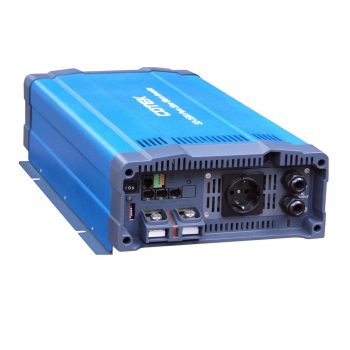
- TRUSTEC / COTEK SD series pure sine wave inverter with 1500 to 3500 W output power
- Scalable inverter solution with reliable AC transfer function
- Parallel operation of up to 15 units for increased output power
- Integrated transfer switch for synchronized AC transfer with 4 ms transfer time
- Suitable for single-phase and three-phase operation in parallel configuration
- Pure sine wave output with THD < 3 % at nominal voltage and linear load
- Available for 12 VDC, 24 VDC and 48 VDC input voltage
- Protection against reverse polarity, undervoltage, overvoltage, overload, short circuit and overtemperature
|
Datasheet
|

- COTEK SE series pure sine wave inverter with 350 W or 400 VA output power
- Compact inverter for household, office and vehicle applications
- Pure sine wave output with THD < 3 % at normal load
- Available for 12 VDC, 24 VDC and 48 VDC input voltage
- Output voltage 200 / 220 / 230 / 240 VAC
- Output frequency 50 / 60 Hz with high frequency stability
- Protection against overload, short circuit, DC overvoltage/undervoltage and overtemperature
- Can be used with optional CR-8 remote control
| Datasheet |
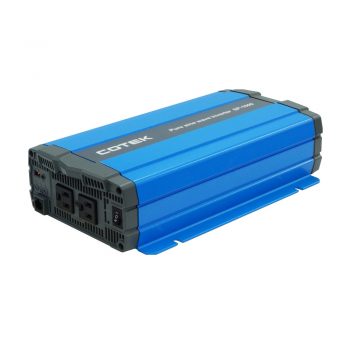
- COTEK SP series pure sine wave inverter with 700 to 4000 W continuous output power
- Proven inverter series for vehicle, industrial and backup applications
- Pure sine wave output with THD < 5 % at normal load
- Available for 12 VDC, 24 VDC and 48 VDC input depending on model
- Output voltage 200 / 220 / 230 / 240 VAC ± 3 %
- Output frequency 50 / 60 Hz ± 0.5 %, selectable via DIP switch
- RS232 communication and optional CR8 / CR16 remote control operation
- Protection against undervoltage, overvoltage, overtemperature, overload and short circuit
| Datasheet |
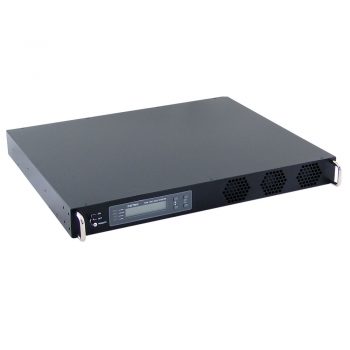
- COTEK SR series pure sine wave inverter with 1000 W rated power
- 19" 1U rack-mount design for telecommunication, network and backup systems
- Pure sine wave output with THD < 2 %
- Available with 24 VDC or 48 VDC input
- Adjustable output voltage from 194 to 246 VAC
- Adjustable output frequency from 47 to 63 Hz or 0.5 %
- RS232 communication interface and potential-free alarm contact
- Protection against reverse polarity, overvoltage, undervoltage, short circuit and overtemperature
| Datasheet |

Power Inverters (DC → AC Converters)
Power inverters are electronic devices that convert direct current (DC) into alternating current (AC). They allow a DC source — e.g. battery, DC-link, or solar generator — to supply AC devices. Depending on the type, inverters deliver single-phase or three-phase AC, making them a central component whenever only a DC source is available. :contentReference[oaicite:10]{index=10}
Questions & Answers on Power Inverters
What is the main function of a power inverter?
The main function is to convert direct current (DC) into alternating current (AC). This enables operation of devices that require AC supply — for example household appliances, machines, or test equipment. :contentReference[oaicite:11]{index=11}
When is an inverter used?
It is used whenever only a DC source is available — for instance batteries, solar panels, storage units or DC power supplies — and AC devices need to be powered. Also in off-grid systems, UPS units or mobile power supplies inverters are essential. :contentReference[oaicite:12]{index=12}
What input voltages can an inverter accept?
Depending on design, various DC input voltages are possible — commonly 12 V, 24 V, 48 V for smaller battery systems, while larger systems (e.g. PV with battery storage) may use 200–400 V DC or higher. :contentReference[oaicite:13]{index=13}
What output parameters does an inverter typically provide?
An inverter delivers AC voltage and frequency compatible with grid or devices — typically 230 V at 50 Hz in Europe. For larger or industrial systems, three-phase 400 V AC can be provided. Power rating can range from small watt-levels up to several kilowatts or more. :contentReference[oaicite:14]{index=14}
How does the DC → AC conversion work technically?
Modern inverters use power semiconductors (transistors, MOSFETs, IGBTs) that rapidly switch the input DC. This switching produces an AC output at defined frequency. Often filters are applied to generate a clean sine wave suitable for AC loads or grid connection. :contentReference[oaicite:15]{index=15}
Which types of inverters exist?
There are, among others, string, module or central inverters (especially in photovoltaic systems), grid-tied inverters, off-grid / standalone inverters and hybrid inverters that can also manage batteries. The appropriate type depends on application, power level and DC source. :contentReference[oaicite:16]{index=16}
What are typical application areas for inverters?
Inverters are used in solar power systems, UPS and backup power systems, off-grid installations, battery-based power supply, mobile power solutions, and essentially everywhere DC must be converted to AC for operation of AC-devices. They are also used in industrial applications, for machines or test benches when a DC source is used. :contentReference[oaicite:17]{index=17}
How important is the efficiency of an inverter?
A high efficiency is crucial to minimise energy losses during conversion — particularly in PV-systems or battery-backed supply systems. Modern semiconductor inverters can achieve efficiencies up to around 99 %. :contentReference[oaicite:18]{index=18}
What protective and control functions can an inverter offer?
Depending on design, inverters may incorporate overload protection, short-circuit protection, temperature monitoring. In grid-connected systems they often monitor the grid and disconnect automatically in case of faults — especially for safe grid integration. :contentReference[oaicite:19]{index=19}
What should be considered when selecting an inverter?
Key aspects are input voltage, output power rating, waveform quality (ideally sine wave), type of load (resistive, inductive or electronic), mode of operation (grid-tied or off-grid), safety and protection functions, and compatibility with the DC source (battery, PV-generator, etc.). For sensitive electronics clean voltage and stable frequency are essential; also the total load should remain within the inverter’s power rating.
Are inverters suitable for industrial applications?
Yes — inverters can be dimensioned for industrial loads, machines or test stands, provided they supply sufficient power and the correct output voltage. For high currents or high power requirements, suitably sized inverters with robust power electronics must be used.