







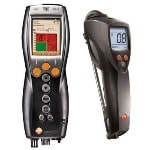
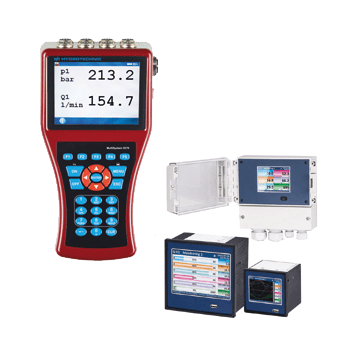
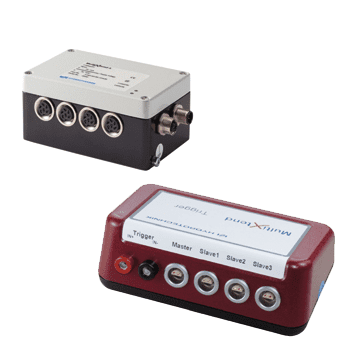
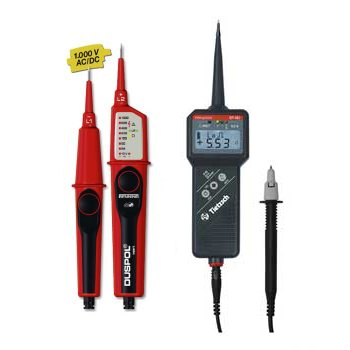
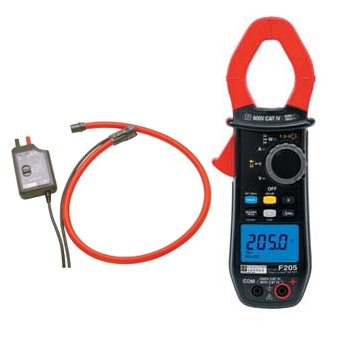
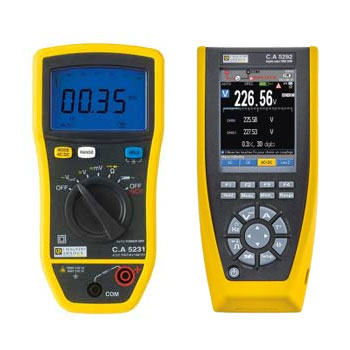
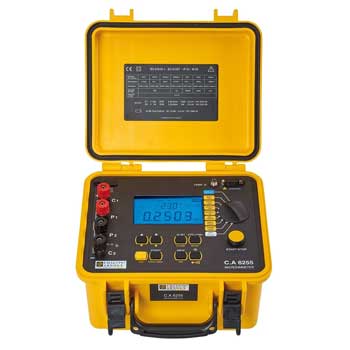
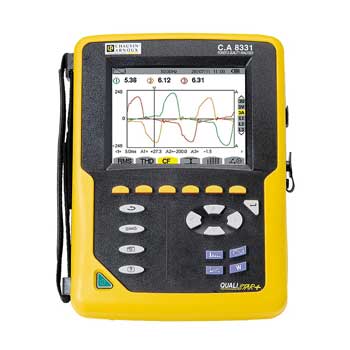
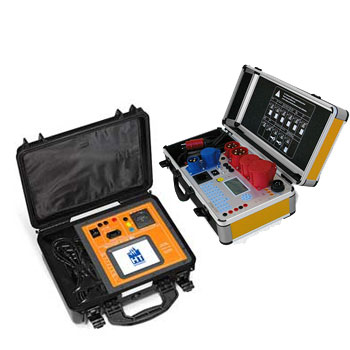
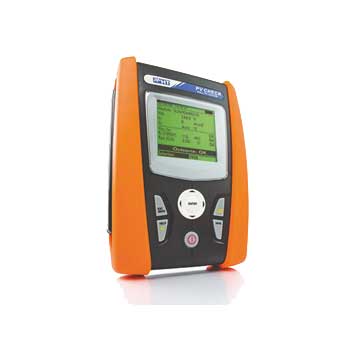
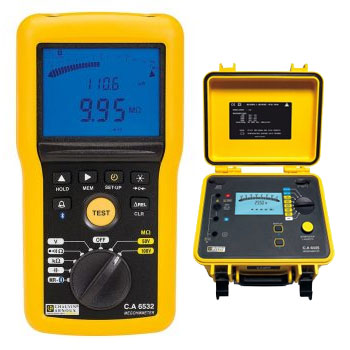
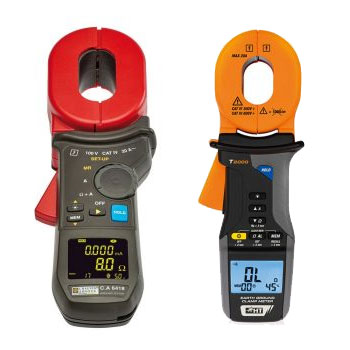
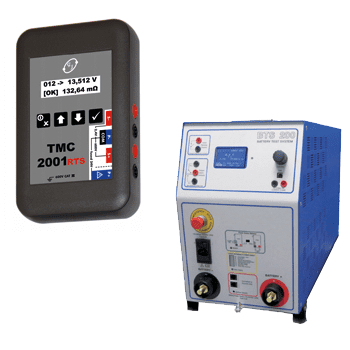
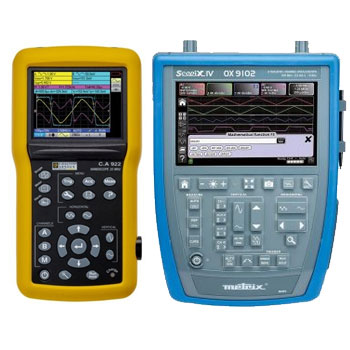
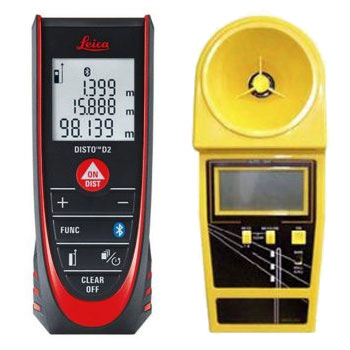
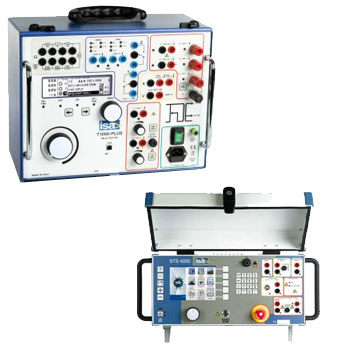
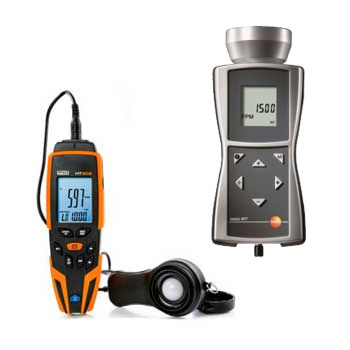


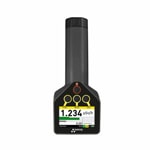
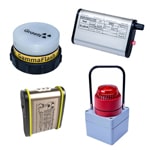
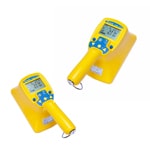
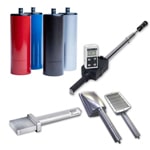
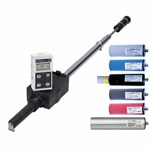

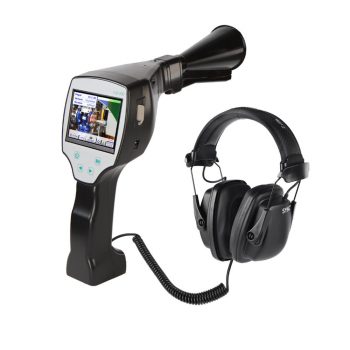
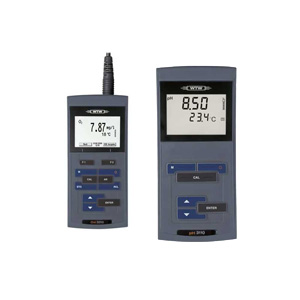























- Data HOLD
- MAX/MIN/PEAK(1ms)
- RANGE
- REL
- Laser pointer (only ECLIPSE)
- White LED illuminator:
- Bluetooth connection (BLE 4.0) for connection to mobile devices by using HTMercury APP
 Datasheet Datasheet |
| User Manual |

- I-V curve tracing of modules and strings up to 1500V and 40A
- Measurement of front-side and rear-side solar radiation for mono- and bi-facial module testing, even high efficiency
- Measurement of open-circuit voltage and short-circuit current Voc/Isc
- Database of PV module performance
- Automatic acquisition of the cell calibration value (by using suitable cells)
| Datasheet |
| User Manual |
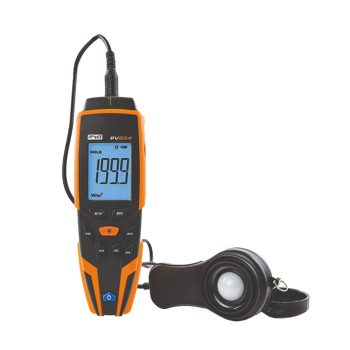
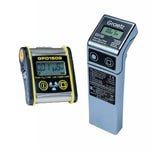
Mobile digital solar meter. PV204 is a digital solar meter for measurements of solar irradiation up to 2000W/m2, which can be used as an inspection device, typically in photovoltaic installations.
| Datasheet |
| User Manual |

1500V Multifunction I-V Curve Tracer for maintenance and efficiency tests on single-phase installations.
- Measurement of efficiency of a single-phase photovoltaic system
- Measurement of I-V Curve of a module or of a string up to 1500V/10A - 1000V/15A
- Measurement of open-circuit voltage of a module or of a string (VOC) 1500V
- Measurement of short-circuit current of a module or of a string (ISC) 15A
SOLAR I-Ve allows both testing a single-phase (three-phase with optional MPP300) photovoltaic system and verifying I-V curve. Thanks to remote unit SOLAR02, it is possible to test the system complying with the requirement of simultaneity as provided for by the reference standard. SOLAR02 is a datalogger which, synchronized with SOLAR I-Ve, acquires the data relevant to irradiation and temperature while tests carried out by SOLAR I-Ve are carried out. For measuring I-V curve, SOLAR I-Ve manages an internal database of the modules, which can be updated at any time by the user by comparing the measured data with the rated values, thus allowing the immediate evaluation whether the string or the module fulfills the efficiency parameters declared by the manufacturer. Current and voltage measurement at modules/strings output is measured with the 4-terminal method, which allows extending possible measuring cables without considering any compensation of their resistance, thus obtaining always precise measurements. At the end of the test, the display of I-V curve on the screen is a clear indication about the compliance with the specifications declared by the panel manufacturer.
| Datasheet |

Multifunction commissioning tester up to 1500V / 40A capable of taking the following measurements:
- Insulation measurement on PV modules/strings/fields up to 1500VDC (with PI and DAR calculation)
- Open circuit voltage Voc up to 1500V in accordance with IEC/EN62446
- Short circuit current Isc up to 40A in accordance with IEC/EN62446
- Continuity of protective conductors with 200mA
- Polarity
- GFL function for fault finding on strings and PV modules
- Tests on single-facial and bi-facial modules
- Automatic acquisition of the cell calibration value (by using suitable cells)
| Datenblatt |
| Flyer |
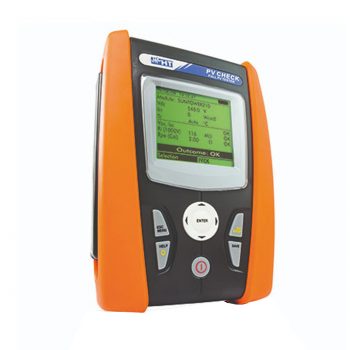
- Measurement of insulation up to 1000VDC
- Open-circuit voltage and short-circuit current Voc/Isc up to 1000V/15A
- Continuity of protective conductor with 200mA
| Datasheet |
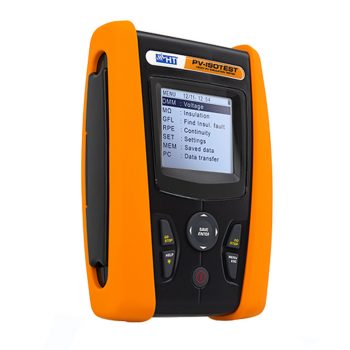
| Measurement category | CAT III 1500V DC / CAT III 1000V AC |
| AC TRMS voltage measurement | 3 ÷ 1000V |
| DC voltage measurement | 3 ÷ 1500V |
| Insulation resistance | 250, 500, 1000, 1500V |
| GFL function to locate the fault position in the string | |
| Measurement of polarization index P.I. | |
| Dielectric absorption ratio D.A.R | |
| Continuity of protective conductors with 200mA | |
| Size (LxWxH) (mm) | 235 x 165 x 75mm |
| Weight | 1.2kg |
| Datasheet |
| Brochure |
| Manual |
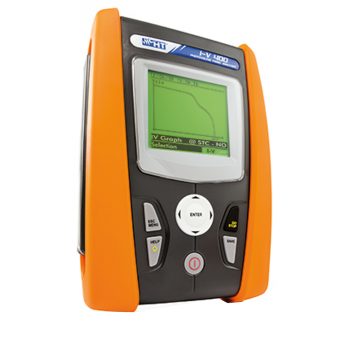
- Measurement of I-V Curve of one or more modules or of one whole string up to 1000V/15A
- Measurement of open-circuit voltage and short-circuit current Voc/Isc
- Database of 30.000 selectable photovoltaic modules
|
Datasheet
|
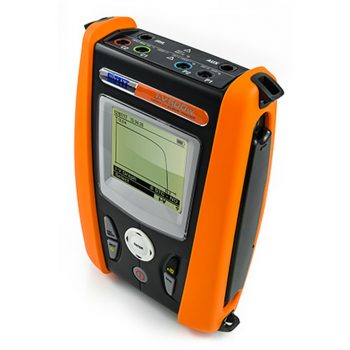
- Measurement of I-V Curve of one or more modules or of one whole string up to 1500V/15A
- Measurement of open-circuit voltage and short-circuit current Voc/Isc
- Database of 30.000 selectable photovoltaic modules
|
Datasheet
|
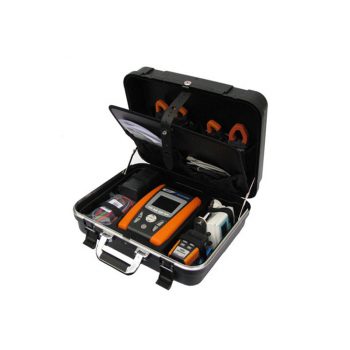
- New touchscreen interface
- Verification of the efficiency of the photovoltaic system
- Power quality Analysis with voltage Fast Transient (5µs) measurement
|
Datasheet
|
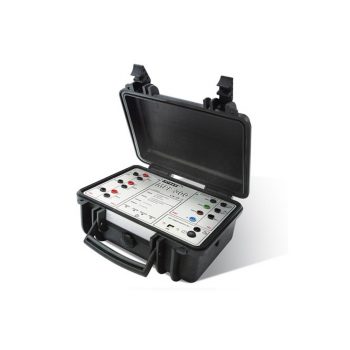
- Contemporary analysis of 3 strings
- Compatible with SOLAR300N and SOLAR I-V
- Integrated rechargeable battery
|
Datasheet
|
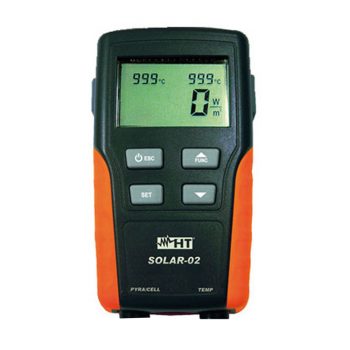
Remote unit for recording irradiation and temperature
- Real-time display of irradiation and temperature values
- Setting up to 3 irradiation probes
- Use with pyranometers and reference cells
- Connection to Master units via USB or radio frequency connection RF
- Synchronization with master unit when starting testing/recording.
- Measurement of the tilting angle of PV panels
- Magnetics on the back side of meter
|
Datasheet
|

Photovoltaic Devices / PV Test Instruments
Photovoltaic devices and PV test instruments are used for commissioning, troubleshooting, verification and documentation of PV modules, strings and complete photovoltaic systems. They measure typical parameters such as open-circuit voltage, short-circuit current, string voltage and current, insulation resistance, earth resistance, temperature, irradiance and AC parameters on the inverter side. This supports safe operation, performance assessment and compliance with applicable test specifications.
FAQ
What are PV test instruments?
PV test instruments are specialised measuring devices for photovoltaic systems. They check modules, strings and DC/AC sides for electrical safety, correct wiring and performance.
Which quantities are typically measured?
Common quantities include open-circuit voltage (Voc), short-circuit current (Isc), string voltage, string current, insulation resistance, earth resistance, AC voltage and current at the inverter, frequency, power and energy.
What is the difference between PV installation testers and PV analysers?
PV installation testers focus on safety and standard-compliant tests such as insulation and continuity checks, while PV analysers add advanced features like IV curve tracing, performance analysis and long-term logging.
What is the purpose of IV curve measurement?
IV curve measurement records the current-voltage characteristic of a module or string. From this curve, maximum power, fill factor, efficiency, shading effects or cell defects can be identified.
Why are insulation tests important in PV systems?
Insulation tests verify that sufficient insulation exists between live conductors and earth. Low insulation resistance may indicate cable damage, moisture ingress or module faults.
Why must irradiance and temperature be measured?
PV output strongly depends on irradiance and module temperature. Measuring these values allows test results to be interpreted correctly and compared or normalised to standard conditions.
What must be considered when measuring Voc and Isc?
Open-circuit voltage must only be measured on safely disconnected strings. Short-circuit current measurement requires suitable instruments and protection, and the maximum ratings of components must never be exceeded.
Which tests are common during commissioning?
Typical tests include visual inspection, polarity checks, string voltage measurement, short-circuit current measurement or comparison against design values, insulation testing, earth testing and inverter functional checks.
What do PV string testers do?
PV string testers compare and verify strings for correct voltage, current and insulation resistance, and help detect faults such as open circuits, reversed polarity or strongly deviating strings.
How are faults in PV strings detected?
Faults are often detected by comparing voltage, current or IV curves between strings, by identifying low power output, by detecting insulation faults or by observing abnormal deviations from expected design values.
What is the role of earthing measurements in PV systems?
Earthing measurements ensure that metallic parts, frames and protective conductors are correctly bonded to earth so that fault currents can be safely discharged.
What must be considered for DC-side measurements?
The DC side may carry high voltages even when the inverter is switched off. Proper safety procedures, DC-rated instruments, suitable connectors and personal protective equipment are essential.
How are measurement results typically documented?
Many PV instruments store values internally or on memory cards. Data can be transferred to software for generating reports, acceptance documentation or long-term records.
How do portable devices differ from stationary monitoring systems?
Portable test instruments are used for commissioning, inspection and troubleshooting on site, whereas stationary systems continuously monitor yield, operating state and alarms and report deviations automatically.
Which safety aspects apply when using PV test instruments?
Correct range selection, proper test leads, adequate voltage rating, prevention of arcing and use of appropriate personal protective equipment are crucial for safe operation.
When are repeated tests advisable?
Repeated tests are useful for condition assessment, verification after faults, after construction changes or as part of scheduled maintenance to ensure long-term availability and safety.
What accuracy do PV test instruments typically provide?
Accuracy depends on instrument class. High-precision devices are used for performance and IV curve analysis, while safety testers focus on reliable pass/fail decisions according to defined limits.
Which additional features may PV instruments offer?
Additional features may include data logging, GPS tagging, automatic string identification, comparison against design data, temperature probes, irradiance sensors and interfaces to PC, tablet or cloud platforms.
Which standards and test requirements are supported?
PV test instruments support the execution of the applicable standards and guidelines for PV system testing, often through predefined test routines or configurable measurement sequences.