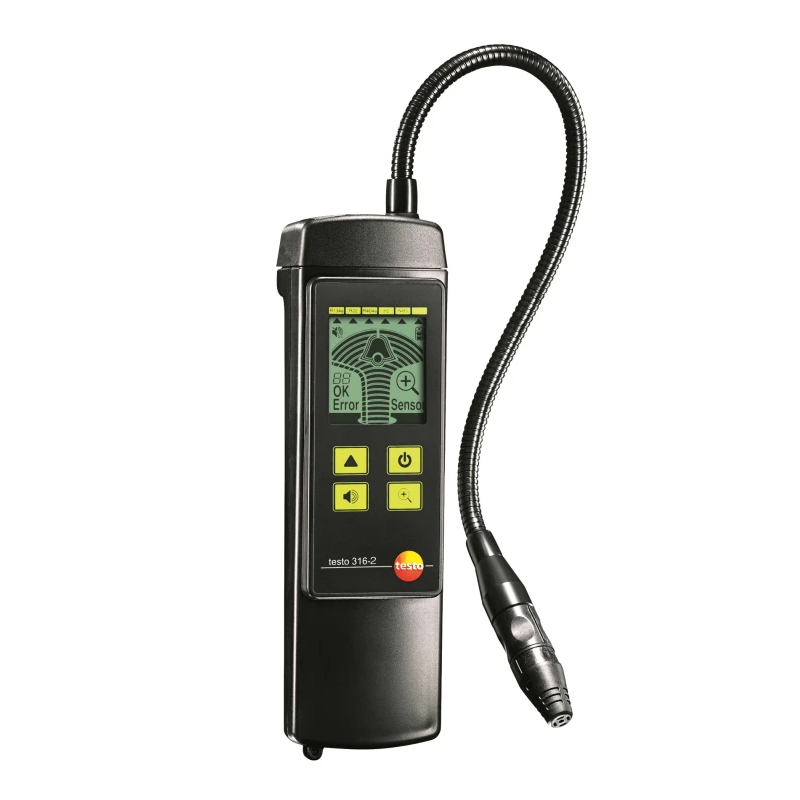
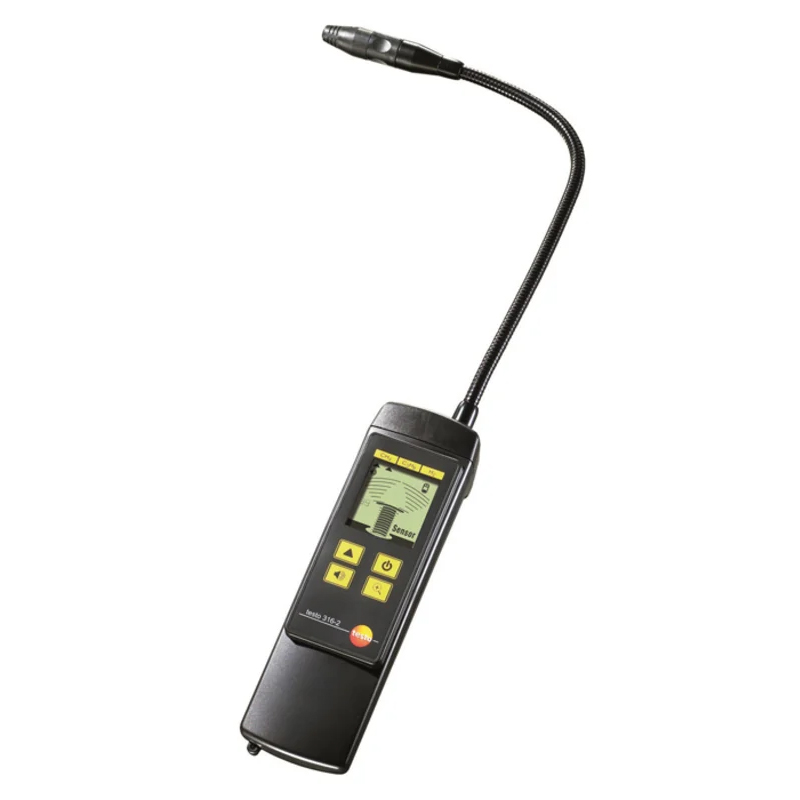
testo 316-2 – Gas leak detector with integrated pump for fast spot checks


  • 18-segment bar graph display visualizes gas concentration, additional indication of maximum leakage
  • Fast response time thanks to the integrated pump
  • Flexible probe for reaching hard-to-access pipelines
  • Long operating time thanks to the rechargeable battery
Datasheet
User Manual
Whether you are checking flanges or valves as typical “leak points”: with the testo 316-2 gas leak detector, you can quickly detect whether gases such as methane, propane, and hydrogen are present in elevated concentrations in the ambient air.

Safely tracking down gas leaks with the testo 316-2 gas leak detector

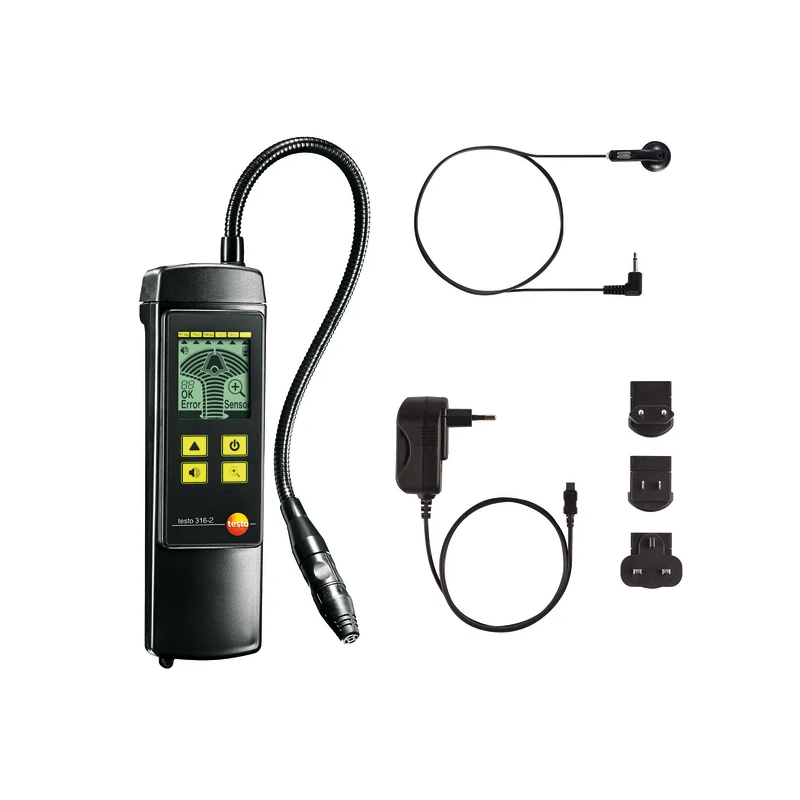
Even if you already know that a leak exists but still need to locate it, the gas leak detector provides exactly the right tool: the 18-stage bar graph display as well as the maximum leak indication show the gas concentration on the display and reliably guide you to the source of the gas leak. An acoustic alarm also warns when limit values are exceeded. Particularly practical is the fact that the testo 316-2 gas leak detector features a headphone output: thanks to the supplied in-ear headphones, you can clearly hear the acoustic alarm even in noisy environments.

Scope of delivery

You receive the electronic testo 316-2 gas leak detector including power supply unit and in-ear headphones.


Technical data

General technical data

Operating humidity
20 to 80 %RH
Weight
348 g
Response time
t₉₀ < 2 s
Dimensions
190 x 57 x 42 mm (without probe)
Operating temperature
-5 to +50 °C
Warm-up time
60 s
Battery type
NiMH rechargeable battery
Battery life
6 h
Display type
18-segment bar graph display
Storage temperature
-25 to +60 °C

Methane (CH₄)

Measuring range
10 ppm to 4.0 vol. %
Lower response threshold
10 ppm
1st alarm threshold
200 ppm
2nd alarm threshold
10,000 ppm

Propane (C₃H₈)

Measuring range
10 ppm to 1.9 vol. %
Lower response threshold
10 ppm
1st alarm threshold
100 ppm
2nd alarm threshold
5,000 ppm

Hydrogen (H₂)

Measuring range
10 ppm to 4.0 vol. %
Lower response threshold
10 ppm
1st alarm threshold
200 ppm
2nd alarm threshold
10,000 ppm


Applications

Gas leak detection on gas pipelines in heating environments

Gas leak detection is an essential inspection of gas pipeline components for tightness or the presence of a leak. A gas pipeline is considered tight if no gas escapes from the pipeline at exposed points. This means that especially openly installed gas pipelines are checked for external tightness. Leaks are detected by probing connection points, e.g. at fittings, flanges, threaded connections, and gas control valves. Checking building entry points and concealed gas pipelines in cavities at air outlet points is also important. State-of-the-art gas leak detection involves the use of an electronic gas leak detector (“sniffer”).

Technical advice: 03303 / 50 40 66

Technical advice for this product


    In accordance with the General Data Protection Regulation (GDPR), we are obliged to inform you about the collection of data. We meet this obligation by referring to our privacy notice.


    testo 316-2 – Gas leak detector with integrated pump for fast spot checks

    • 18-segment bar graph display visualizes gas concentration, additional indication of maximum leakage
    • Fast response time thanks to the integrated pump
    • Flexible probe for reaching hard-to-access pipelines
    • Long operating time thanks to the rechargeable battery
    Datasheet
    User Manual
    Whether you are checking flanges or valves as typical “leak points”: with the testo 316-2 gas leak detector, you can quickly detect whether gases such as methane, propane, and hydrogen are present in elevated concentrations in the ambient air.

    Safely tracking down gas leaks with the testo 316-2 gas leak detector

    Even if you already know that a leak exists but still need to locate it, the gas leak detector provides exactly the right tool: the 18-stage bar graph display as well as the maximum leak indication show the gas concentration on the display and reliably guide you to the source of the gas leak. An acoustic alarm also warns when limit values are exceeded. Particularly practical is the fact that the testo 316-2 gas leak detector features a headphone output: thanks to the supplied in-ear headphones, you can clearly hear the acoustic alarm even in noisy environments.

    Scope of delivery

    You receive the electronic testo 316-2 gas leak detector including power supply unit and in-ear headphones.


    Technical data

    General technical data

    Operating humidity
    20 to 80 %RH
    Weight
    348 g
    Response time
    t₉₀ < 2 s
    Dimensions
    190 x 57 x 42 mm (without probe)
    Operating temperature
    -5 to +50 °C
    Warm-up time
    60 s
    Battery type
    NiMH rechargeable battery
    Battery life
    6 h
    Display type
    18-segment bar graph display
    Storage temperature
    -25 to +60 °C

    Methane (CH₄)

    Measuring range
    10 ppm to 4.0 vol. %
    Lower response threshold
    10 ppm
    1st alarm threshold
    200 ppm
    2nd alarm threshold
    10,000 ppm

    Propane (C₃H₈)

    Measuring range
    10 ppm to 1.9 vol. %
    Lower response threshold
    10 ppm
    1st alarm threshold
    100 ppm
    2nd alarm threshold
    5,000 ppm

    Hydrogen (H₂)

    Measuring range
    10 ppm to 4.0 vol. %
    Lower response threshold
    10 ppm
    1st alarm threshold
    200 ppm
    2nd alarm threshold
    10,000 ppm


    Applications

    Gas leak detection on gas pipelines in heating environments

    Gas leak detection is an essential inspection of gas pipeline components for tightness or the presence of a leak. A gas pipeline is considered tight if no gas escapes from the pipeline at exposed points. This means that especially openly installed gas pipelines are checked for external tightness. Leaks are detected by probing connection points, e.g. at fittings, flanges, threaded connections, and gas control valves. Checking building entry points and concealed gas pipelines in cavities at air outlet points is also important. State-of-the-art gas leak detection involves the use of an electronic gas leak detector (“sniffer”).


    Technical advice: 03303 / 50 40 66

    Technical advice for this product


      In accordance with the General Data Protection Regulation (GDPR), we are obliged to inform you about the collection of data. We meet this obligation by referring to our privacy notice.


      Diese Website benutzt Cookies. Wenn du die Website weiter nutzt, gehen wir von deinem Einverständnis aus.