









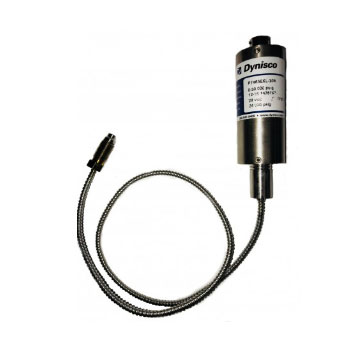
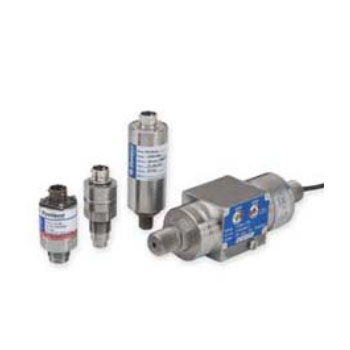
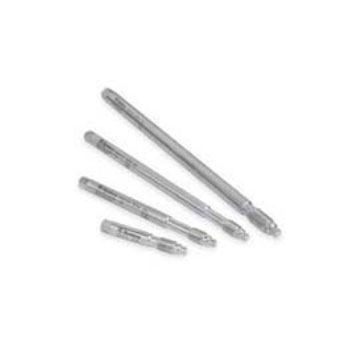
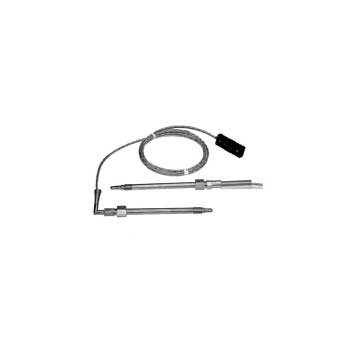
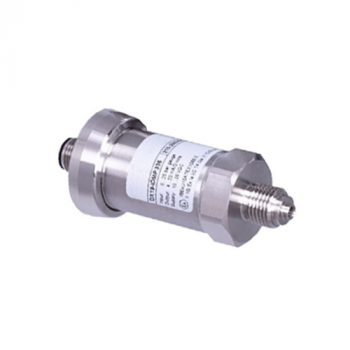



























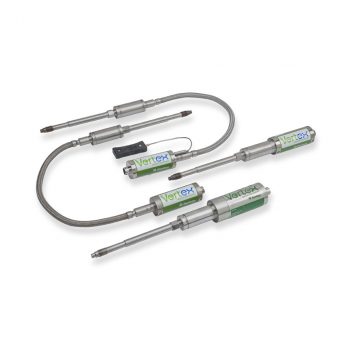
- No fill material
- RoHS compliant for sustainability programs
- Robust, thicker Inconel diaphragm is coated with DyMax®
- Optional Type J or K thermocouple is available to provide a melt temperature signal as well as a 4-20 mA temperature output
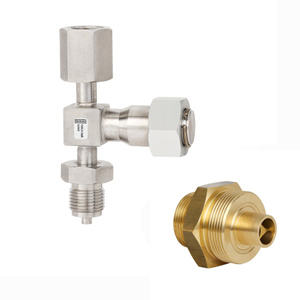
- Equipped with a 1/2-20 UNF for installation in standard transducer mounting holes
- Also available to install 1/2-20 UNF units into a Button Seal application
- Diaphragm composition of Inconel 718 coated with the abrasion resistant properties of DyMax®
- Sealed, welded shell and electrical connection available if washdown capability is needed for food or mechanical applications (not available if thermocouple option TCx is selected)
- Available with thermocouple temperature output
- 250-10,000 PSI pressure range capability
- HART digital communication available
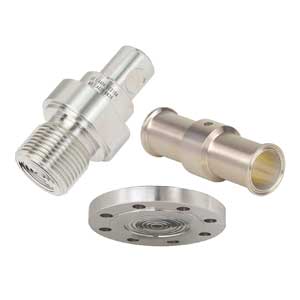
- Direct measurement tip is a simple and elegant design with a more robust diaphragm
- Direct measurement of process reduces errors transferred by complicated internal support structures, transmission fill materials, or moving push rods
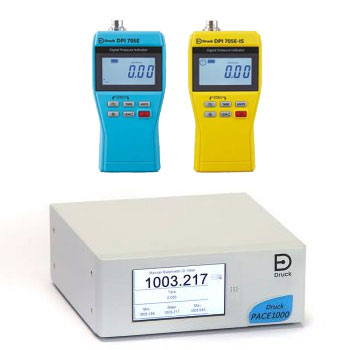
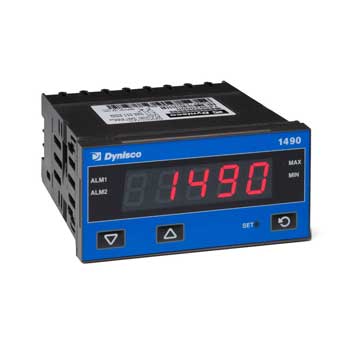
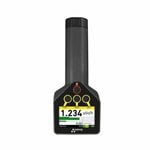
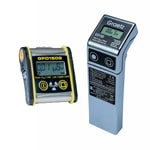
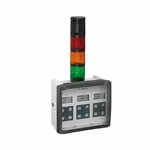
- Designed to work with universal pressure indicators
 Datasheet Datasheet |
| User Manual |
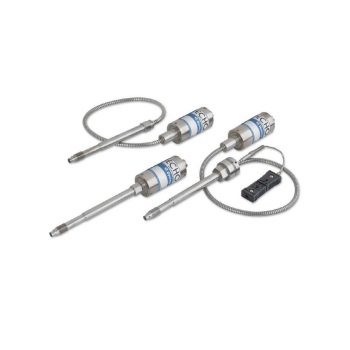
- Alternative fill model available
- Accuracy better than ±0.5%
- TiAlN diaphragm coating is standard
- mV/V, 0-10VDC, or mA outputs available
- Integral temperature sensor option
- Available in configurations that fit most extruder applications
- 1.5M, 3M, 5M, 7.5M & 10M psi pressure range capability
| Datasheet |
| User Manual |
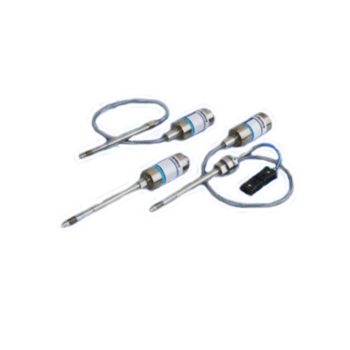
- Better than ±0.5% accuracy
- Push - rod design
- Measures up to 750°F (400°C)
- All stainless steel, wetted parts
- Internal 80% shunt calibration
| Datasheet |
| User Manual |
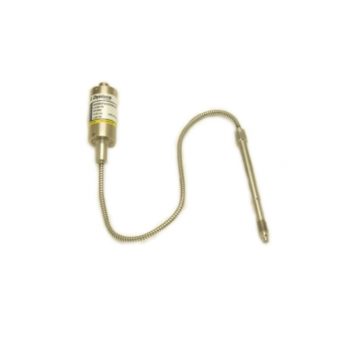
- Adjustable zero and span
- Push-rod technology, non-liquid filled system
- Accuracy better than +/- 0.5%
- DyMax® coated convoluted SST wetted parts
- 4 - 20 mA output
- Internal 80% shunt calibration
| User Manual |
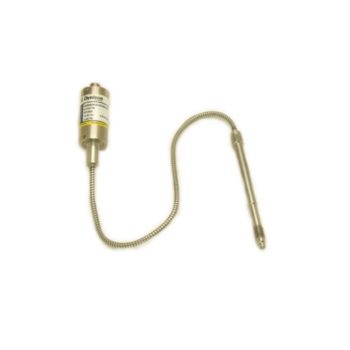
- 3.33 mV/V full scale output
- Accuracy of better than ±0.5%
- Pressure ranges from 0 - 35 BAR to 0 - 700 BAR
- Temperature up to 538°C
- All welded stainless steel with washdown capability
- Available with hermetic connector or conduit fitting
- Internal 80% shunt calibration
- CE approved
| Datasheet |
| User Manual |

- 3.33 mV/V full scale output
- Accuracy of better than ±0.25%
- Pressure ranges from 0 - 35 BAR to 0 - 700 BAR
- Handles temperatures up to 1000°F
- Superior thermal compensation
- Inconel diaphragm
- Internal 80% shunt calibration
- CE Approved
| Datasheet |
| User Manual |

- Accuracy better than ±0.25%
- Measures up to 1000°F (538°C)
- NaK fill meets FDA and USDA requirements
- Inconel diaphragm
- 0 - 500 to 0 -10,000 psi
- 3.33 mV/V FSO
| Datasheet |
| User Manual |
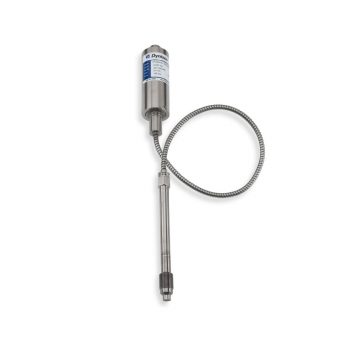
- Auto-Zero functionality
- Oil fill meets FDA requirements
- Accuracy better than ±0.5%
- DyMax® coated convoluted SST wetted parts
- 4 - 20 mA output
- No span or zero pots
| Datasheet |
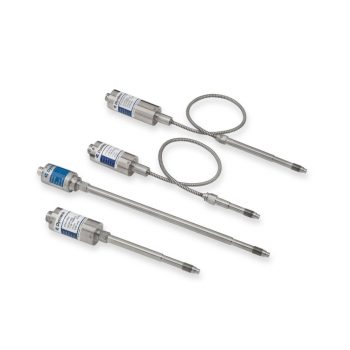
- Adjustable zero and span
- Oil fill meets FDA requirements
- Accuracy better than +/- 0.5%
- DyMaxTM coated convoluted SST wetted parts
- 0 - 5 Vdc output
- Internal 80% shunt calibration
- Easily adapt transmitter to process conditions
- Ideal for medical and food extrusion
- Repeatable, reliable pressure measurements
- Superior abrasion resistance
- Direct input to supervisory control systems
- Easy to set up
| Datasheet |
- Adjustable zero and span
- Oil fill meets FDA dn USDA requirements
- Accuracy better than ±0.5%
- DyMax® coated convoluted SST wetted parts
- 0 - 10 Vdc output
- Internal 80% shunt calibration
| Datasheet |
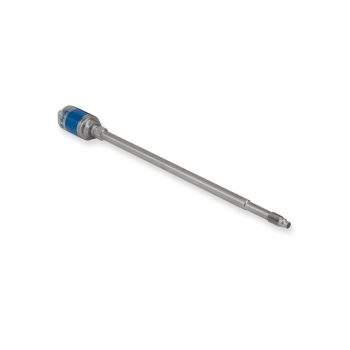
- 3.33 mV/V full scale output
- Accuracy of better than ±0.5%
- Pressure ranges from 0 - 500 psi to 0 - 10,000 psi
- All welded stainless steel with washdown capability
- FDA recognized safe (GRAS) for food and medical applications
- Available with hermetic connector or conduit fitting
- Internal 80% shunt calibration
- CE approved
| Datasheet |
| User Manual |
- Better than ±0.5% accuracy
- Special fill material
- 0 - 1000 to 0 - 10,000 psi
- 3.33 mV/V FSO
- Fill material meets FDA and USDA requirements
| Datasheet |
| User Manual |

Mercury-Free Sensors by Dynisco
“Mercury-free sensors” from Dynisco are pressure and process sensors designed without mercury or other hazardous fill media. Instead, they use alternative fill fluids — or in some sensor designs no fill medium at all. That makes them more environmentally friendly, safer to handle, and especially suitable for sensitive applications such as food production, medical or pharmaceutical processing. Despite the elimination of hazardous media, they offer high precision, robustness and meet industrial standards for pressure, temperature and chemical resistance.
Mercury-free sensors enable process or melt pressure measurement without the hazards of traditional mercury-filled sensors. They provide standardized output signals (e.g. 4–20 mA, mV/V, 0–5 V / 0–10 V), resist corrosion and high temperature, and can be integrated into existing plants or control systems — ideal for plastic extrusion, injection molding or other industrial processes under demanding conditions.
Questions & Answers on Mercury-Free Sensors
What does “mercury-free” mean?
That the sensor does not use mercury as a filling medium — no toxic or environmentally harmful fluid is involved in pressure transmission.
Why choose mercury-free sensors?
They are safer, easier to handle and dispose of, comply with environmental and safety regulations, and suitable for sensitive industries such as food or medical applications.
Which types of sensors are offered mercury-free?
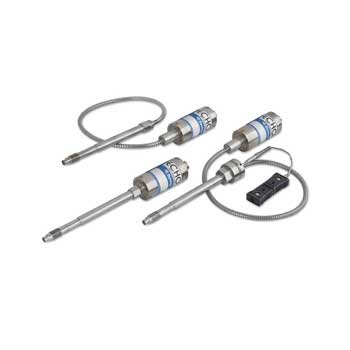
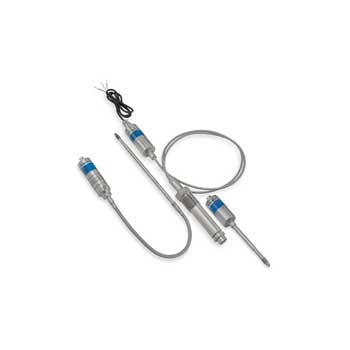
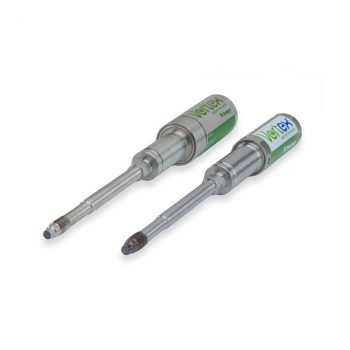
Pressure / melt-pressure sensors and transducers, including models with alternative fill or no fill — e.g. the “Vertex” line and other Mercury-Free / Alternative-Fill series.
Where are these sensors typically used?
In plastic processing (extrusion, injection molding), polymer production, food or medical application, packaging, and any industry where contamination, safety or environmental impact matters.
What output signals do they provide?
Depending on the sensor: mV/V, 4–20 mA, 0–5 V, 0–10 V (or similar standard signals), compatible with data acquisition, PLC or control systems.
How do they perform under high pressure / temperature?
They are engineered for industrial use — using robust diaphragms (e.g. coated Inconel or stainless steel), temperature and pressure resistance, corrosion resistance and long-term durability.
Is integration into existing installations easy?
Yes — they use standard process fittings and output signals, making retrofitting or initial installation straightforward and compatible with many control and monitoring systems.
Are there drawbacks compared to traditional sensors?
The main difference lies in the fill medium (or lack thereof); performance in terms of accuracy, response and durability remains comparable. In manchen Spezialfällen kann jedoch die Auswahl eines geeigneten Modells entscheidend sein (z. B. Temperaturbereich, Medium, Signalart).
When is a mercury-free sensor especially recommended?
When environmental safety, hygiene standards, contamination prevention or regulatory compliance are important — e.g. in food or medical processing plants, sustainable manufacturing, or when working under strict safety and environmental guidelines.