






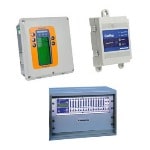


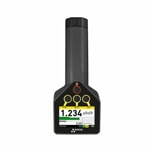
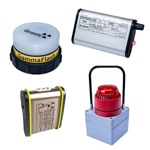

























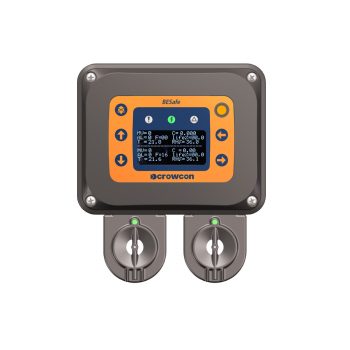
BESafe is a state-of-the-art dual-channel gas detector with smart sensors, built for battery energy storage systems. It offers fast response, remote maintenance, and flexible installation to protect compact, high-risk spaces.
 Datasheet Datasheet
|
User Manual
|
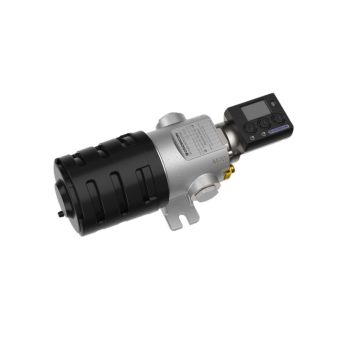
IR Plus is a dependable, durable, and exceptionally sturdy infrared hydrocarbon gas detector that uses dual IR waveband technology. With optional display capabilities, this device ensures swift and fail-safe detection of methane, propane, and various other hydrocarbon further enhances its reliability, making it an ideal choice for demanding environments.
|
Datasheet
|
|
User Manual
|
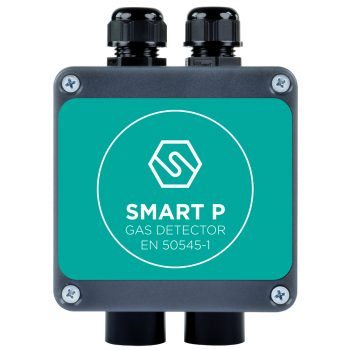
The SMART P detectors from Sensitron have been designed to fulfil the latest European Standard on gas detection in car parks, with the capability to detect CO, NO2 and petrol vapours.
|
Datasheet
|
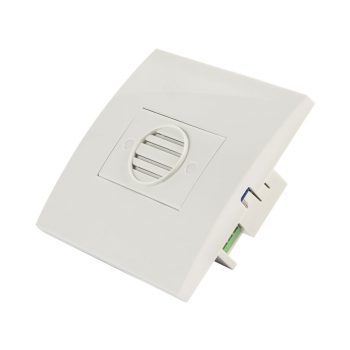
Created specifically for detecting refrigerant gases and carbon dioxide in commercial buildings, the SMART3H-FM LITE from Sensitron features a sleek flush mount design with cost-effective technology and with an infrared sensor for gas detection. A side-mounted RGB LED indicates the detector status, while an internal buzzer activates upon reaching alarm thresholds or in case of detector faults, providing complete peace of mind your customers and personnel are safe.
|
Datasheet
|
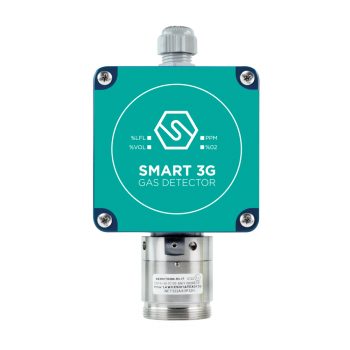
The SMART3G-C3 from Sensitron has sensor options for detecting more than 50 toxic, flammable and refrigerant gases. Ideal for a variety of industrial applications and harsh environments, the device also features ongoing system self-diagnosis and optional RS485 interface for Modbus communication.

|
Datasheet
|
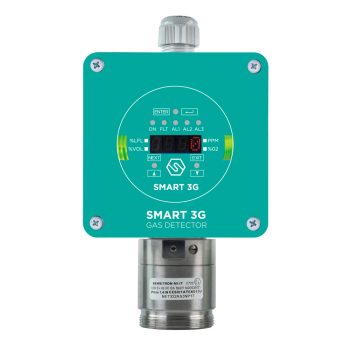
Der SMART3G-D3 von Sensitron verfügt über Sensoroptionen zur Erkennung einer Vielzahl von toxischen, entflammbaren und kälteerzeugenden Gasen. Das Gerät ist ideal für eine Vielzahl von industriellen Anwendungen und rauen Umgebungen und verfügt über eine kontinuierliche System-Selbstdiagnose und eine optionale RS485-Schnittstelle für Modbus-Kommunikation.
| Datenblatt |
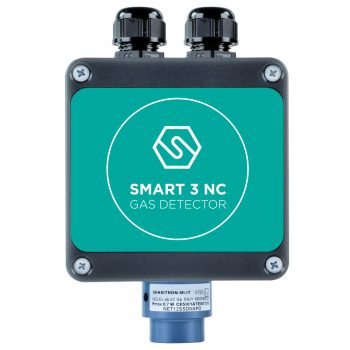
The SMART 3NC from Sensitron is a point gas detector for safe areas, with a number of features for easy operation and maintenance such as on going system self-diagnosis, seamless installation and maintenance via handheld keypad and options for relay output and Modbus communication.
|
Datasheet
|
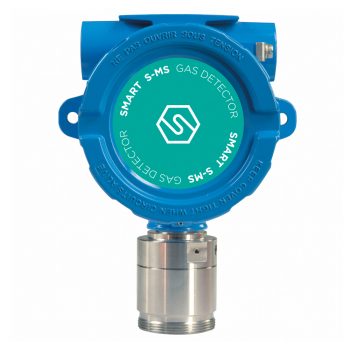
Made with the refining and petrochemical industries in mind, the SMART S-MS from Sensitron is a SIL2 certified fixed gas detector designed to meet the most stringent industrial standards, with an optional aluminium or stainless-steel enclosure and HART and 3-relay card.
| Datasheet |
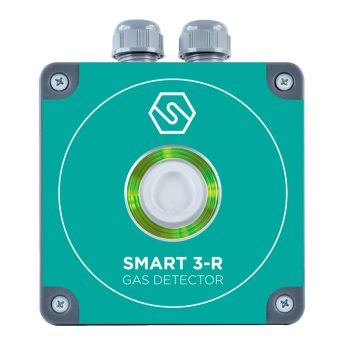
The SMART3-R detector from Sensitron is ideal for applications in light industry and machine rooms, with a buzzer and LED indicator providing rapid alert to the presence of explosive, toxic and refrigerant gases.
|
Datasheet
|
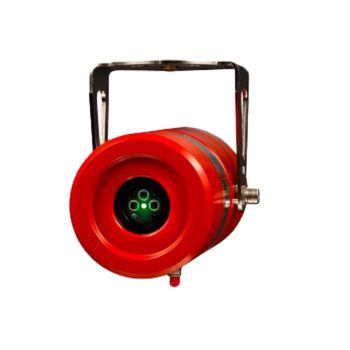
The Fgard H2 is a breakthrough in hydrogen flame detection, delivering first-in-class flame detection with intelligent heated optics for clearer results, and advanced optical verification to greatly reduce false alarms.
| Datasheet |
| User Manual |
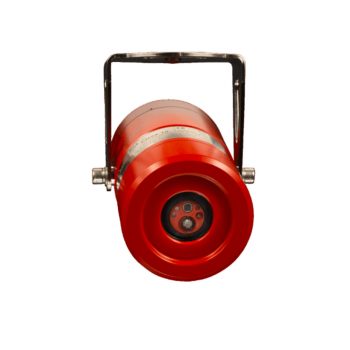
Der Crowcon FGard UVIR-Flammenmelder ist ein explosionsgeschützter Ultraviolett-Infrarot-Flammenmelder, der eine hervorragende Erkennung von Kohlenwasserstoffbränden bietet, die im sichtbaren Spektrum nicht nachweisbar sind. Mit seinen einstellbaren Sensoren kann der Fgard UVIR an Ihre räumlichen Gegebenheiten angepasst werden und ist in der Lage, auch unter schwierigsten Bedingungen zu arbeiten.

| Datasheet |
| User Manual |
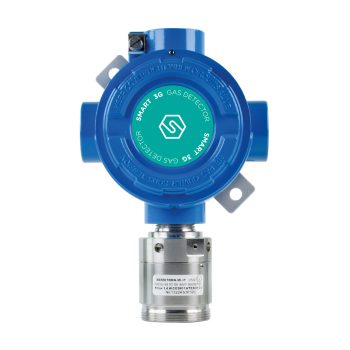
The SMART3G-C2 from Sensitron fixed gas detector has sensor options for detecting more than 50 toxic, flammable and refrigerant gases. It is ideal for a variety of industrial applications and harsh environments. The device also features ongoing system self-diagnosis and optional RS485 interface for Modbus communication.
Optionally available with ModBus RS485.
| Datasheet |
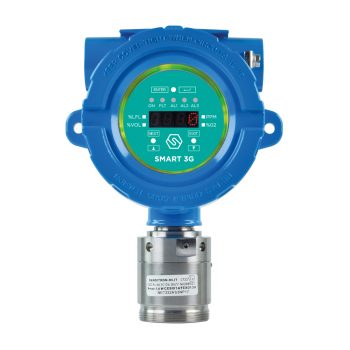
The SMART 3G-D2 is a SIL2 certified fixed gas detector ideal for a variety of industrial applications, capable of monitoring toxic, flammable and refrigerant gases in harsh environments and classified areas.
| Datasheet |
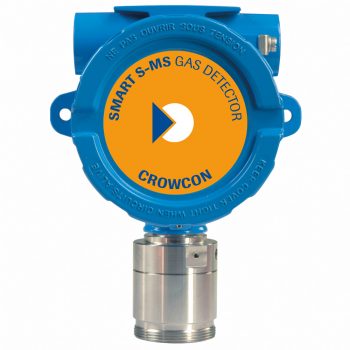
The SMART S-MS 3A is a SIL2 certified fixed gas detector ideal for flammable and toxic gas detection.
Not available anymore.
| Datasheet |
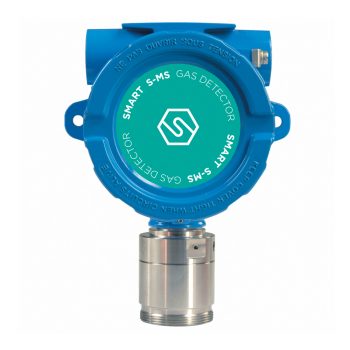
The SMART S-MS MED from Sensitron is designed specifically for use in marine environments, compliant with Lloyd’s Register regulations, and is SIL2 certified. It also has options for both catalytic and infrared sensors for the best possible detection of flammable gases, at land or sea.
| Datasheet |
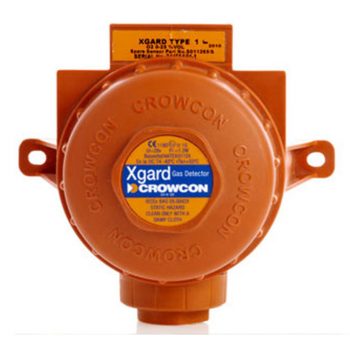
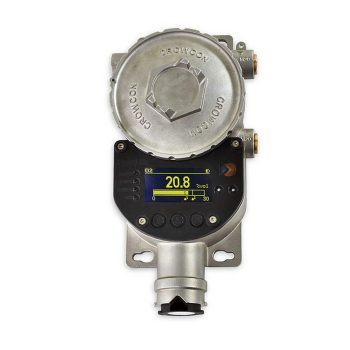
The new XgardIQ, our most intelligent fixed-point gas detector, increases safety by minimising the time operators must spend hazardous areas.
This versatile transmitter and gas detector has a range of features that protect engineers and support facilities managers of oil, gas, chemical & petrochemical plants to name a few.
Available fitted with a variety of flammable, toxic or oxygen gas sensors.
(SIL-2) Safety integrity level 2 certified gas detector.

 Datasheet Datasheet |
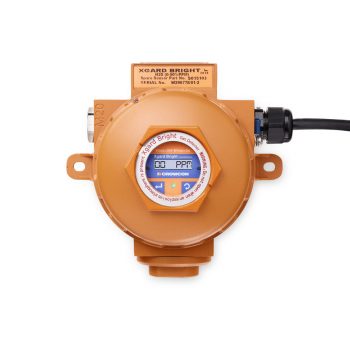
Meet the next generation of flammable gas detection.
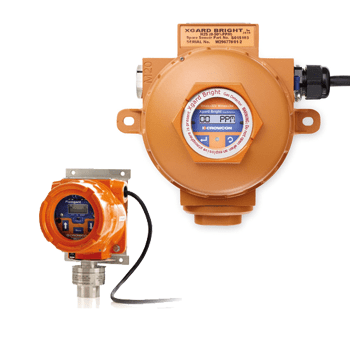
Xgard Bright is a versatile platform offering flammable and toxic gas detection and oxygen monitoring, while providing ease of operation and reduced installation costs. Providing analogue 4-20mA and RS-485 Modbus signals as standard, Xgard Bright comes with an Alarm and Fault relay as standard as well as optional HART communications. Lowering the cost of installation, the 4-wire addressable implementation drastically reduces cabling requirements. The large OLED display allows users to easily work with Xgard Bright during install, calibration and routine maintenance without the need to open the housing. The Xgard Bright is now available with MPS (Molecular Property Spectometer™) technology. Wide range of new gases and sensor types are now available and have been added to the configurator. If you cannot see your gas or range required, please contact Crowcon to discuss options
|
Datasheet
|
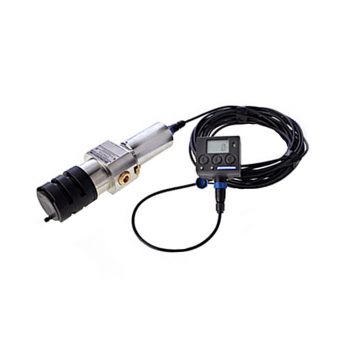
IRmax is an ultra-compact infrared (IR) gas detector that delivers rapid, fail-safe detection of hydrocarbon gases and vapours. The IRmax gas detection system offers the choice of a detector only, a local gas/status display, a remote gas/status display or non-intrusive calibration via an I.S. calibration tool or hand-held HART communicator.
| Datasheet |
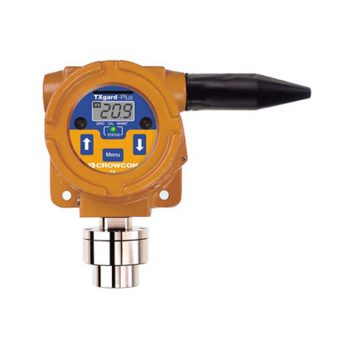
TXgard Plus is a flameproof (Ex d), ATEX, IECEx certified toxic or oxygen gas detector with local LCD display. A choice of sensors are available enabling use in a wide range of applications, including water treatment, oil and gas exploration, chemical plants and steel production.
Not available anymore.
| Datasheet |
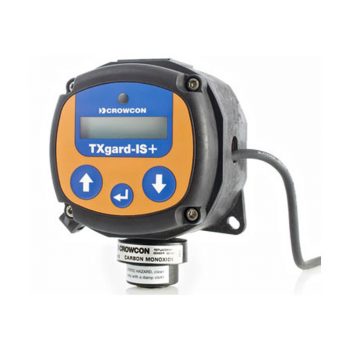
TXgard-IS+ is a Intrinsically Safe (I.S.) toxic and oxygen gas detector with local LCD display. A very wide choice of sensors are available for use in a variety of applications. TXgard-IS+ is ATEX certified for use in Zone 0,1 or 2 hazardous areas and also UL and cUL certified for use in Division 1 or 2 hazardous areas.
| Datasheet |
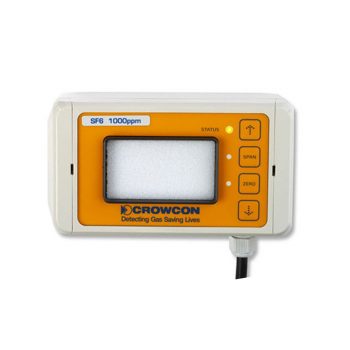
Available for detecting a range of different refrigerant gases and also sulphur hexafluoride (SF6), the F-Gas Detector can be connected to any control system that accepts an analogue signal. Not available anymore.
| Datasheet |
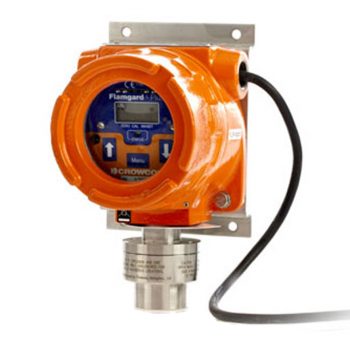
A flameproof (Ex d) pellistor based detector with display & 4-20mA output, for hydrocarbons, hydrogen & petrol vapours.
Not available anymore.
| Datasheet |
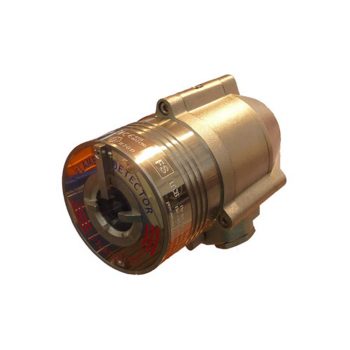
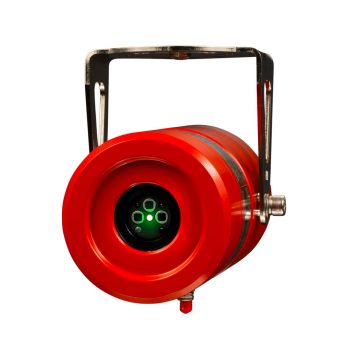
The Crowcon FGard IR3 flame detector is an explosion proof multi spectrum IR flame detector. FGard delivers superior performance, responding to hydrocarbon liquid fuel and gas fires at long distances.
The FGard IR3 delivers first-in-class flame detection with intelligent heated optics for clearer results and advanced optical verification to greatly reduce false alarms
| Datasheet |
| User manual |
| User manual |

Fixed Gas Detection Devices
Fixed gas detection devices are permanently installed measurement and alarm systems for continuous monitoring of flammable, toxic or oxygen-altering gases in industrial and process plants. They consist of sensors, signal or transmission units, evaluation or control panels and optical or acoustic alarms. Their purpose is the early detection of dangerous gas concentrations and the initiation of appropriate protective or countermeasure actions.
FAQ
Which sensor technologies are used in fixed gas detection devices?
Typical technologies include catalytic bead sensors (for combustible gases), electrochemical sensors (for toxic gases and oxygen), infrared sensors (for CO₂ and combustible gases) and open-path optics for area monitoring. The choice depends on the gas type, application environment and operational requirements. :contentReference[oaicite:8]{index=8}
Which gases are typically monitored by fixed systems?
Fixed detection systems monitor combustible hydrocarbons (e.g. methane, propane), toxic gases (e.g. CO, H₂S), oxygen deficiency or enrichment as well as carbon dioxide (CO₂) and other volatile organic compounds depending on the application. :contentReference[oaicite:9]{index=9}
How do fixed systems differ technically from portable devices?
Fixed systems are permanently installed, often redundantly designed, connected to control systems and capable of automatic actions (e.g. ventilation, shutdown). Portable devices are mobile, person-worn and focus on individual exposure conditions. :contentReference[oaicite:10]{index=10}
What interface and connectivity features are common for fixed gas alarm systems?
Common interfaces include 4-20 mA analog outputs, relay contacts, fieldbus communication (e.g. Modbus, Profibus), Ethernet and sometimes wireless connectivity. These enable integration into supervisory, control and safety systems.
Which standards and application conditions apply to fixed gas detection systems?
Relevant standards and regulations include the DGUV Information T 021 (toxic gases/oxygen) and T 023 (explosion protection) as well as EN 60079-29-2 for combustible gas detection. :contentReference[oaicite:11]{index=11}
How is sensor placement determined in fixed systems?
Sensor placement is based on gas behaviour (lighter or heavier than air), possible leak points, ventilation flows and personnel zones. Proper installation is crucial for effective monitoring.
What protection classes and explosion-protection requirements apply?
Devices in explosive atmospheres must feature appropriate ignition protection types (e.g. “Ex”), temperature classes and zone ratings. In addition, high enclosure protection ratings (e.g. IP65/IP66) are common in harsh environments. :contentReference[oaicite:12]{index=12}
How are maintenance, calibration and functional checks performed?
Regular functional tests (e.g. response check), calibration with test gas and defined intervals are essential to ensure operational safety and measurement accuracy. :contentReference[oaicite:13]{index=13}
What data evaluation and documentation options exist?
Fixed systems often provide central evaluation units, data logging of measurement and alarm events, visualization and interfaces for analysis software. These support trend analysis, sensor condition monitoring and audit-ready documentation.
What are the advantages of fixed gas detection systems over portable devices?
They offer continuous monitoring of critical areas, early detection of gas releases, automated interfacing with safety and control systems and are ideal for protecting large or complex installations.